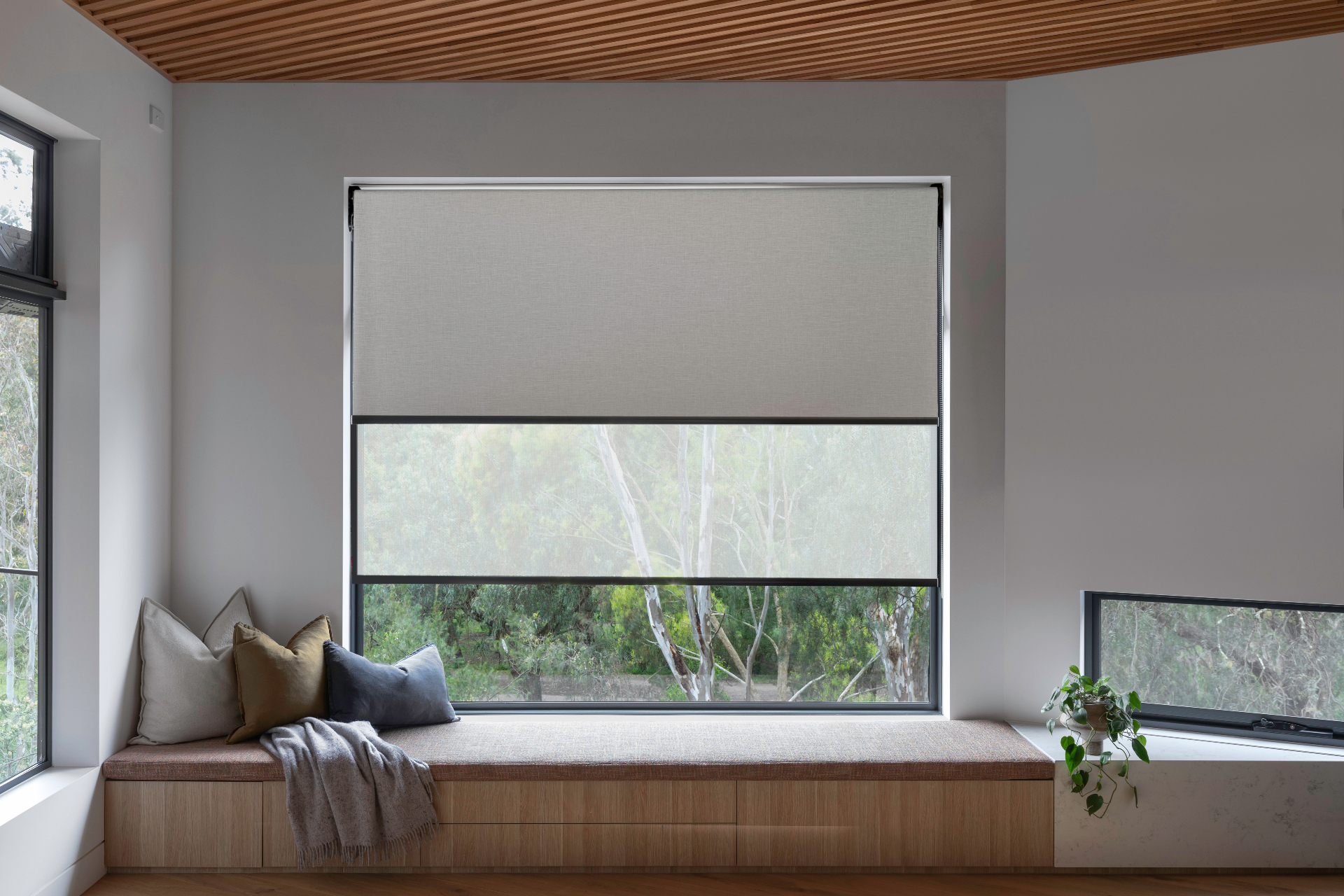
Durable roller blind materials are fabrics and coated textiles engineered to resist abrasion, UV degradation, moisture damage, and routine cleaning, delivering longer service life in busy spaces. Choosing the right material matters because high-traffic and daily wear accelerate surface wear, color fading, and mechanical strain on roller mechanisms.
Which Roller Blind Materials Offer the Highest Durability for Heavy Use?
Durable roller blind materials are those with robust face fabrics, protective coatings, and stable backings that together resist surface abrasion, UV-driven polymer breakdown, and moisture-related staining.
Top durable roller blind materials ranked:
1. PVC-coated polyester: Highly abrasion-resistant and wipeable, combines strength and easy cleaning.
2. Woven vinyl (vinyl-coated scrim): Exceptional moisture resistance and easy maintenance for commercial spaces.
3. Fiberglass-reinforced fabrics: Strong, dimensionally stable and less prone to tearing under stress.
4. Acrylic-coated polyester: Good abrasion and UV resistance with textile appearance.
5. Blackout composite fabrics: Backed/coated constructions that deliver light control plus surface durability.
What Are the Key Fabric Types for Durable Roller Blinds?
Key fabric types include polyester variants, PVC-coated polyester, woven vinyl, fiberglass-reinforced textiles, acrylic-coated materials, and composite blackout fabrics. Polyester roller blind fabric is lightweight, colorfast and accepts coatings that increase abrasion resistance, while PVC-coated polyester adds a continuous surface layer that markedly improves wipeability and stain resistance for busy areas.
How Do Material Properties Like Abrasion and UV Resistance Affect Longevity?
Abrasion resistance and UV stability are primary determinants of a roller blind fabric's useful lifespan. Abrasion resistance describes a surface's ability to withstand repeated friction. UV resistance prevents color fading and polymer breakdown through UV stabilizers and pigmented coatings.
How Do Environmental Factors Impact Roller Blind Fabric Durability?
Environmental factors—solar exposure, humidity, temperature extremes, airborne pollutants, and cleaning regimens—accelerate different failure modes in roller blind fabrics. Choosing materials with corresponding resistances mitigates these risks.
What Role Does UV Protection Play in Preventing Fabric Fading?
UV protection prevents both visual fading and structural degradation by blocking or stabilizing harmful wavelengths before they alter dyes and polymer chains. Look for fabrics specified as UV-stable and consider blackout backings or external shading where solar loads are extreme.
How Does Moisture Resistance Enhance Roller Blind Performance?
Moisture resistance improves performance by preventing water absorption, staining, salt deposits, and biological growth. Hydrophobic coatings, vinyl faces and PVC layers create a barrier that allows quick wiping and reduces dwell time for spills.
Best Maintenance Practices to Extend Roller Blind Wear Resistance
Routine maintenance extends wear resistance by removing abrasive particles, preventing stain setting and identifying mechanical issues before they propagate into fabric damage.
Which Roller Blind Fabrics Are Ideal for Commercial Versus Residential Areas?
Commercial spaces require fabrics with higher abrasion resistance, reinforced hems, fire retardancy, and surfaces that tolerate frequent cleaning. Residential buyers often prioritise texture, color and softness, accepting slightly lower abrasion specs in exchange for improved interior aesthetics.
Visit our Clayton showroom to explore our full range of durable roller blind fabrics, or book a free consultation for personalised advice.