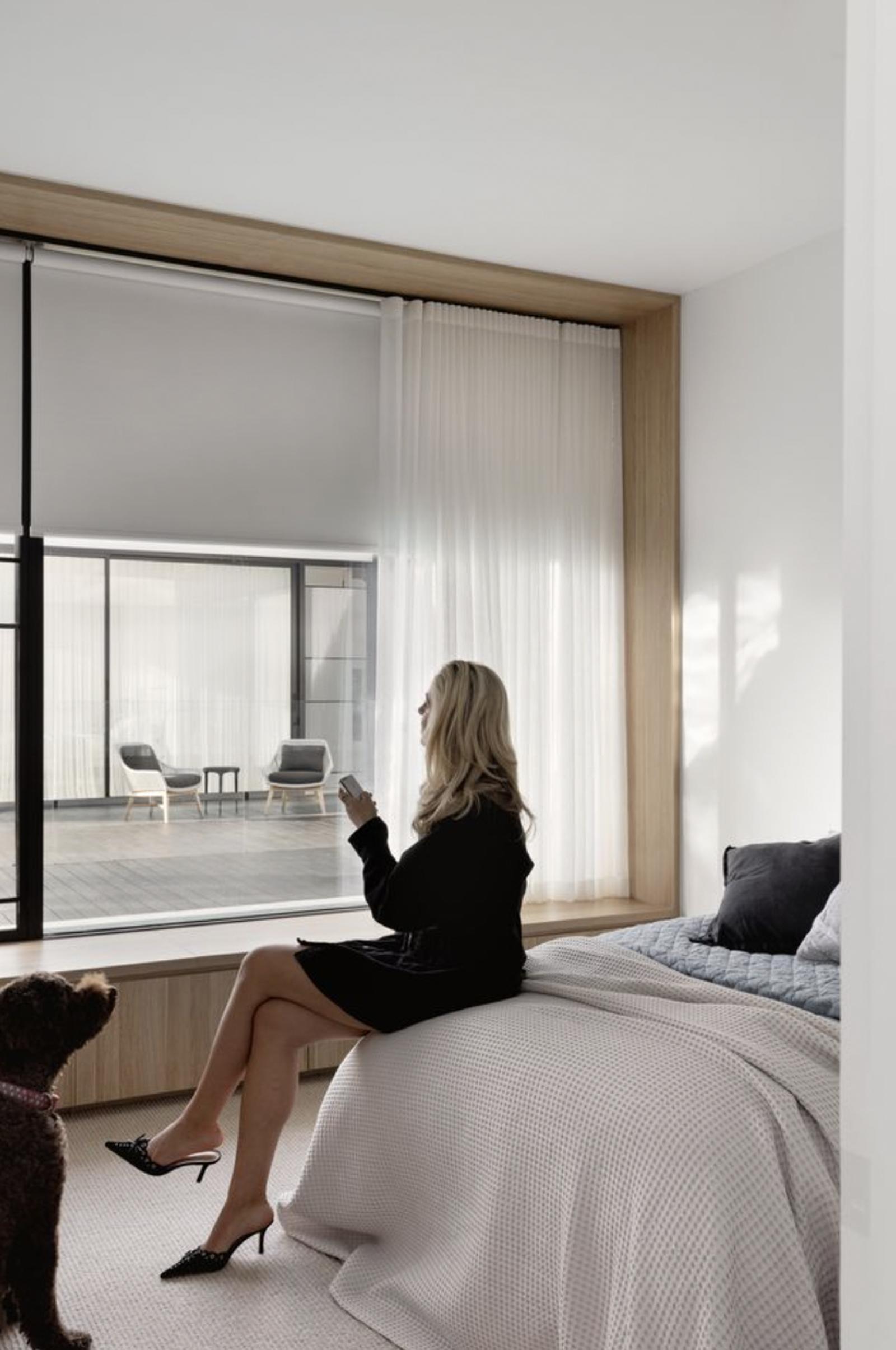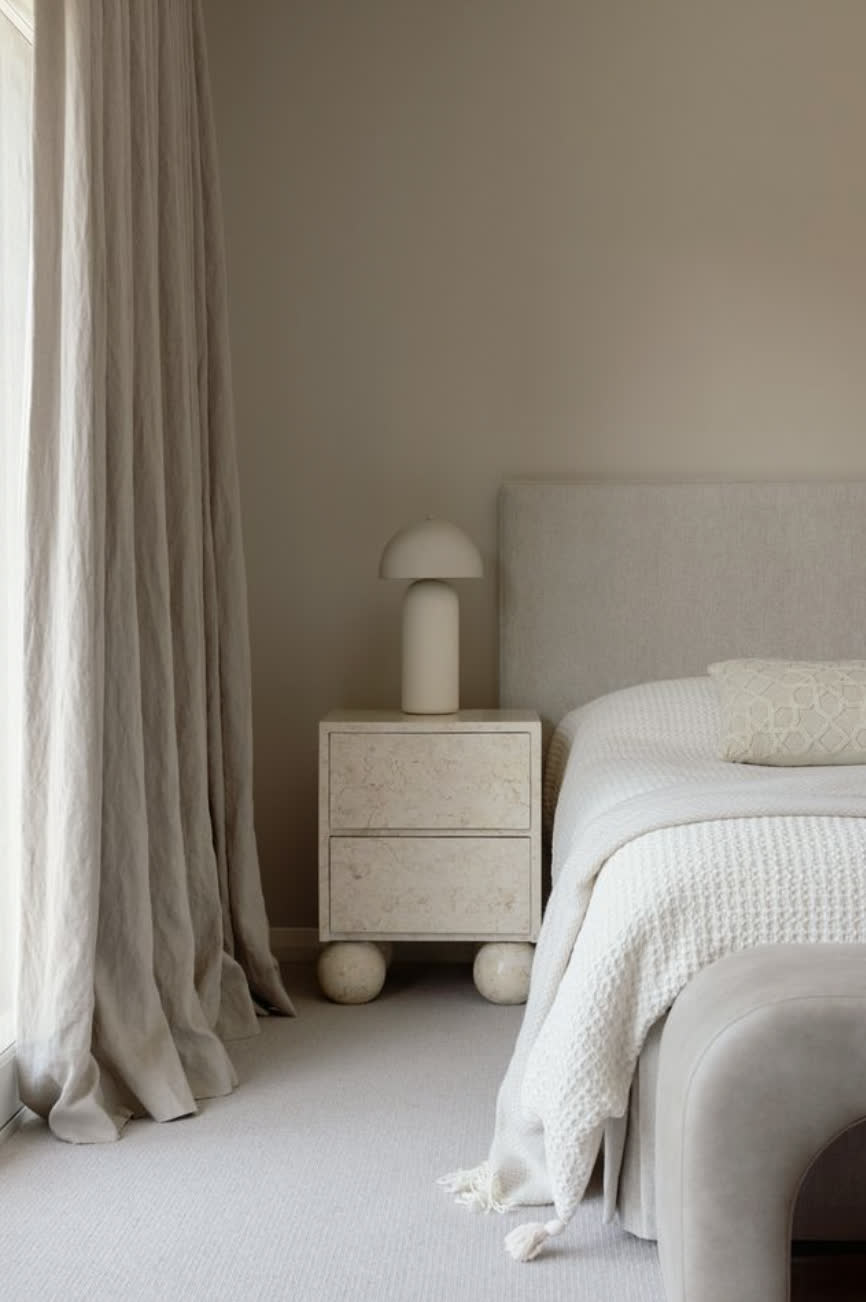
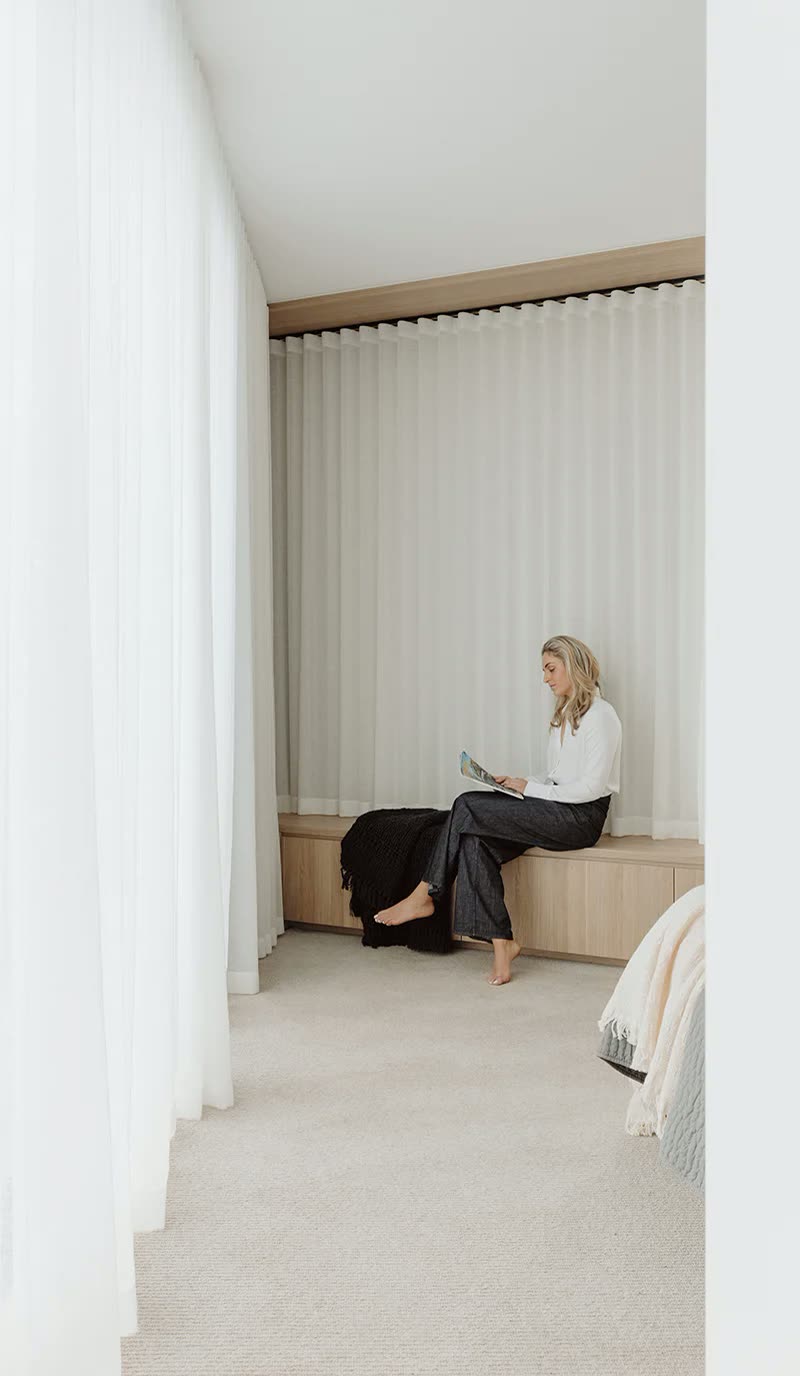
Yes — and in a lot of Melbourne homes, pairing them solves problems neither does alone.
A common combination is a sunscreen roller blind close to the glass, with curtains layered in front. The blind handles daytime glare while keeping the view, and the curtains add privacy, warmth and full light block when closed at night. It's a practical answer to a room that needs to work differently morning, day and evening.
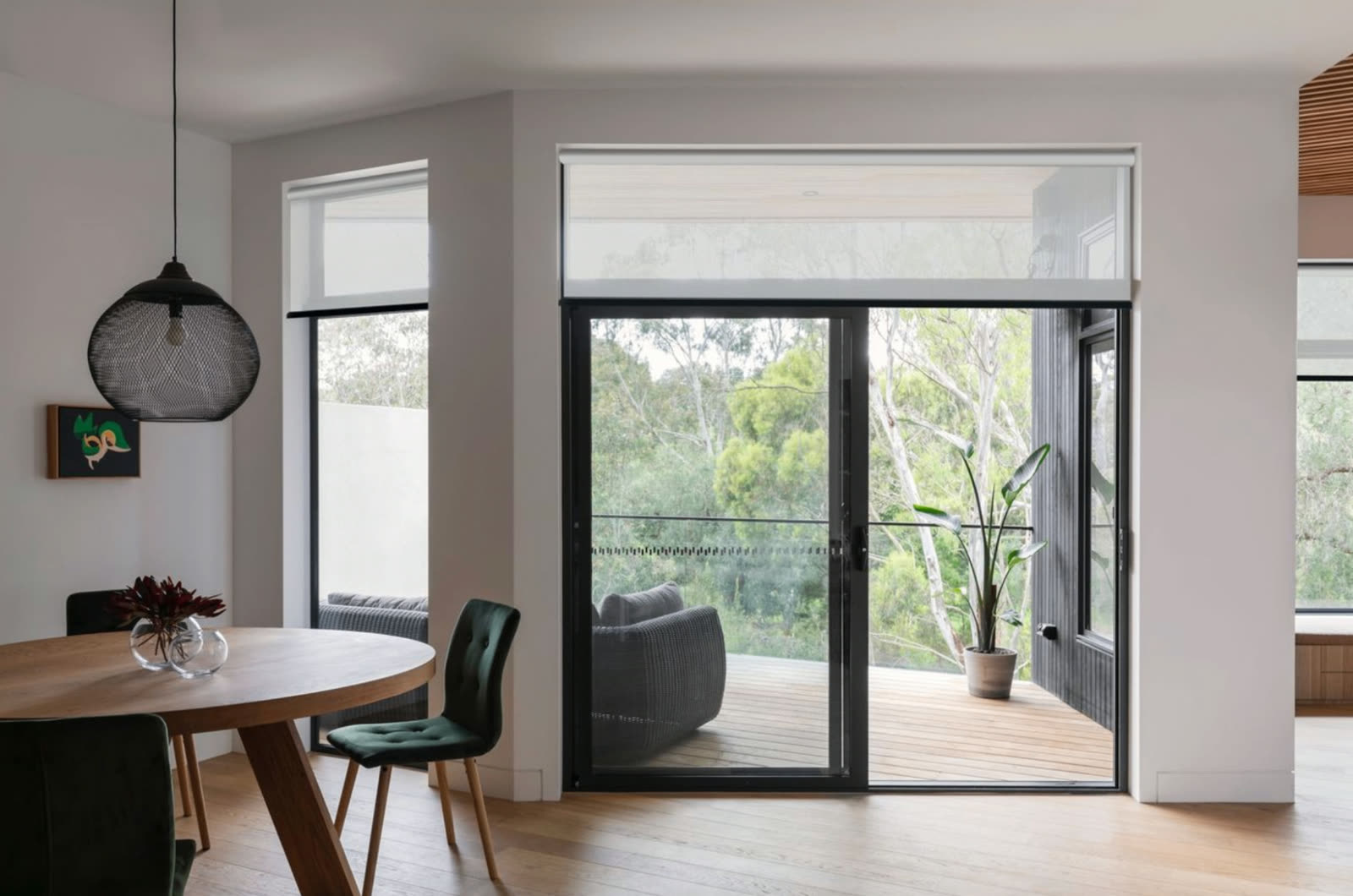
It's not always necessary. A single well-chosen furnishing — a blockout curtain hung ceiling-to-floor, for instance — can do most of the job on its own in a straightforward bedroom or living room. Layering earns its cost in rooms with large glazing, sliding doors, or where daytime and night-time needs genuinely differ.
FAQs
Do curtains and blinds work well together?
Yes — pairing a roller blind close to the glass with curtains in front is a common way to get daytime glare control and night-time privacy and warmth from the same window.
Is it worth paying for both curtains and blinds on one window?
It depends on the room. For large glazing, sliding doors, or rooms with very different day and night needs, layering earns its cost. For a straightforward window, one well-chosen furnishing is often enough.
What's the best blind to pair with curtains?
A sunscreen roller blind is a common pairing — it manages daytime glare and keeps the view, while the curtains handle privacy and warmth when closed.
Does layering curtains and blinds reduce natural light too much?
Not if set up well — the blind and curtains can each be opened independently, so you keep full control over how much light comes in at any time of day.
Related reading
Thinking about layering curtains and blinds? [Book a Free Measure & Quote](/contact) with Tiptop Blinds — in-home, across Melbourne.