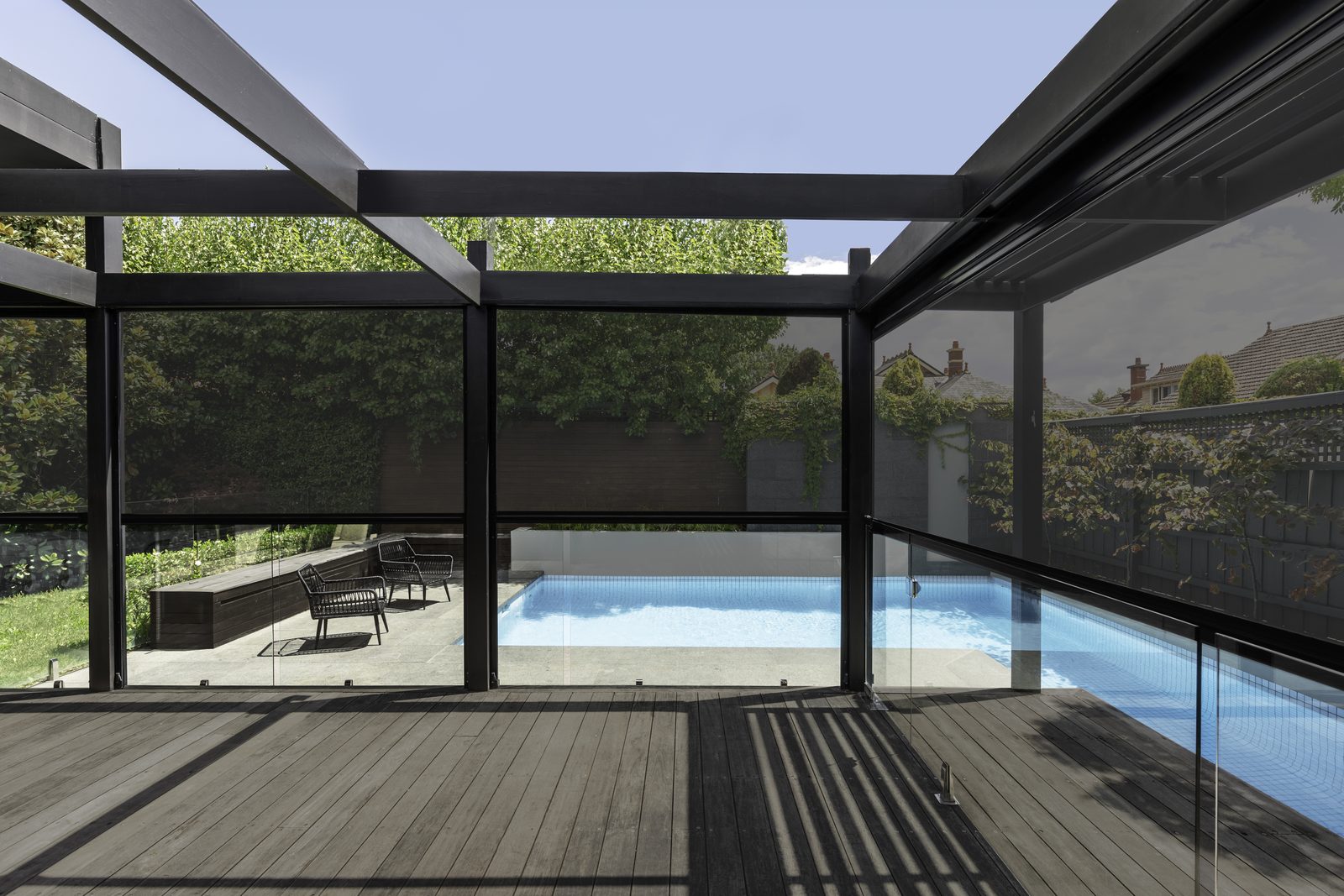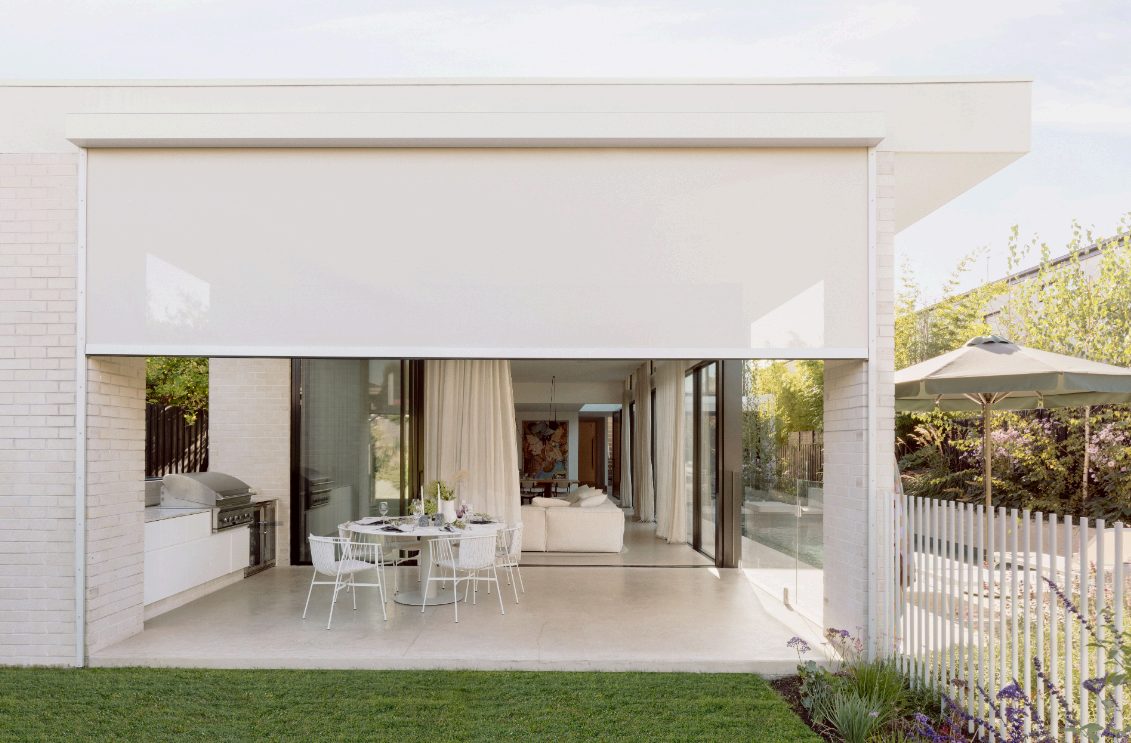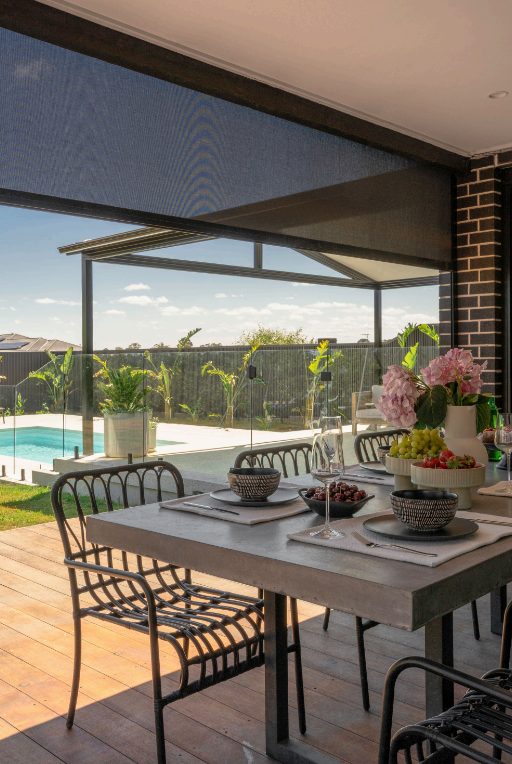
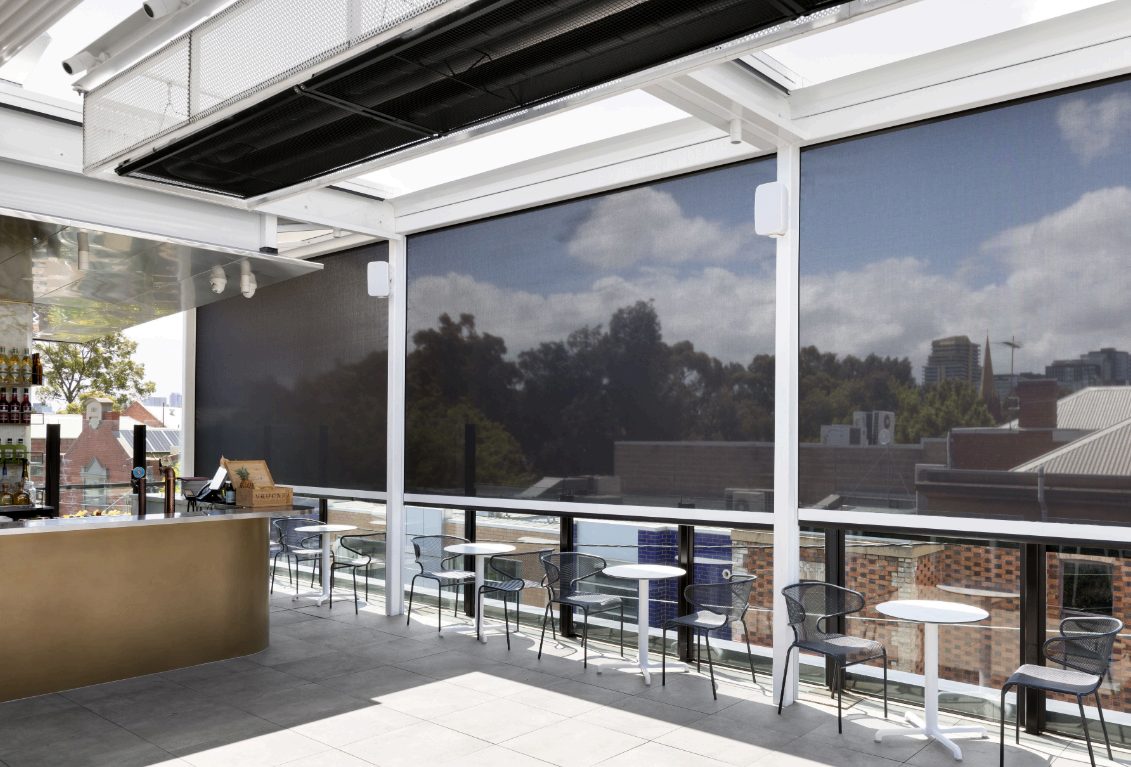
An open alfresco or pergola looks great in the listing photos and gets used a handful of times a year. The gap between how often it could be used and how often it actually is usually comes down to one thing: it's exposed to whatever the weather is doing.
Why an open alfresco goes unused most of the year
Wind, glare, and the occasional shower are enough to keep most people inside, even when an outdoor area is otherwise a genuinely nice place to be. Enclosing the space — even partially — changes that equation considerably.
Zipscreen blinds for full enclosure
Zipscreen outdoor blinds are the more complete solution when the goal is a genuinely enclosed space. Fitted around the open sides of a pergola or alfresco area, they seal against wind, cut glare, and give a level of weather protection an open structure simply doesn't have.
Because the fabric locks into a track on each side, multiple blinds around a space work together rather than each one being a separate, independent seal — the result functions much more like a room than a series of curtains.
Awnings for overhead/window shade
Where the issue is more about overhead sun than enclosing the sides — say, a section of deck that gets brutal afternoon light — a folding arm awning solves that specific problem without the cost or commitment of enclosing the whole space.
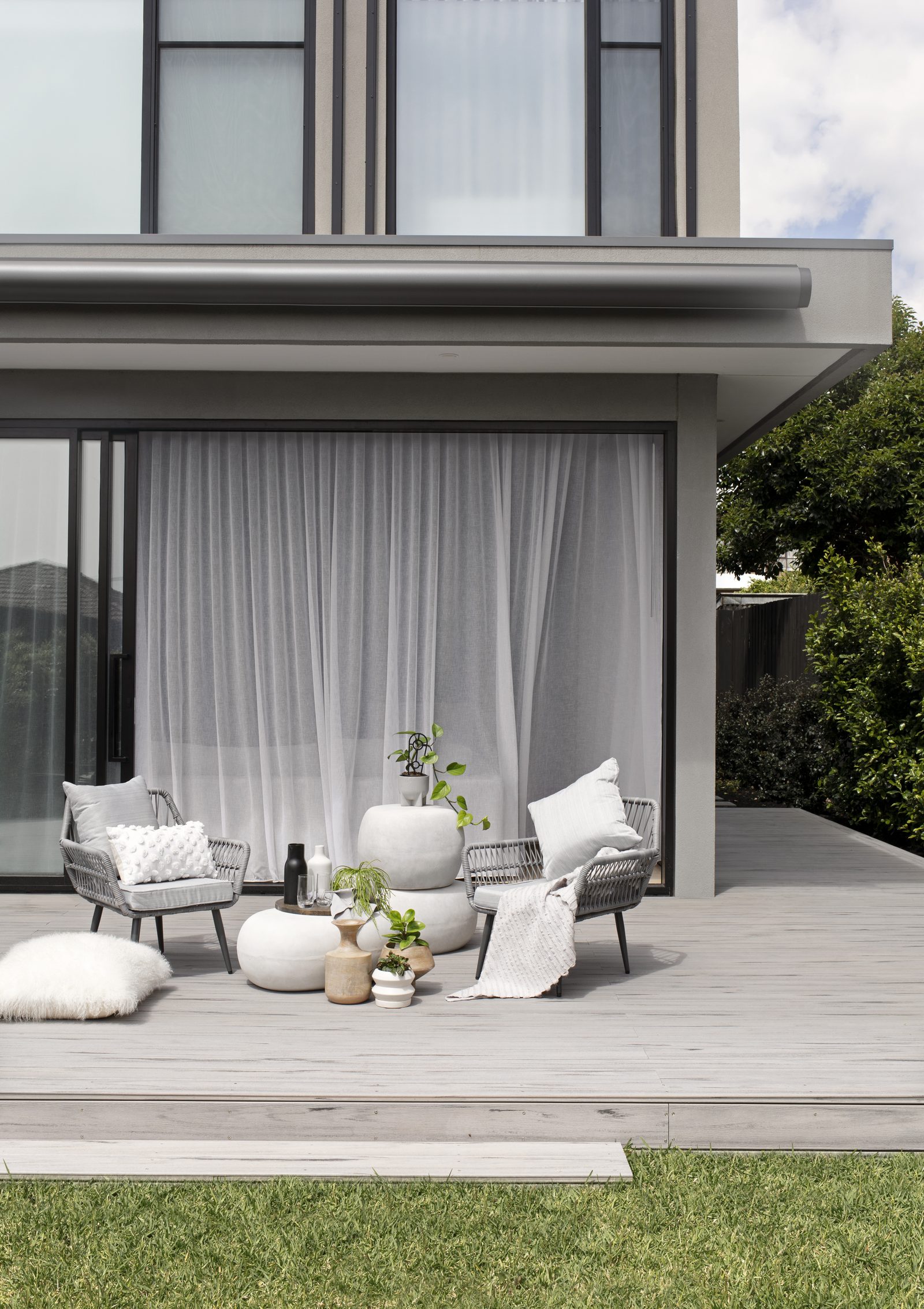
Combining both for a genuine outdoor room
Many Melbourne homes end up using both: Zipscreen blinds around the open sides of the pergola for wind and weather, and an awning over an adjacent window or deck section for adjustable shade. Each product is doing the job it's actually built for.
A typical enclosure project, step by step
Most alfresco or pergola enclosure projects start with an in-home measure, where each open side is assessed individually — some spaces only need one or two sides enclosed, others need a full perimeter. From there, fabric and colour are chosen, motorisation is decided per blind based on size and reach, and installation is scheduled once tracks and hardware are made to the exact measurements. Because each blind is a separate zip-track unit, the project can be staged over time if needed rather than done all at once.
What to consider before you start
Common mistakes to avoid
The most common issue is enclosing a space with too light a fabric for its actual exposure — sunscreen mesh on a side that regularly copes with wind and rain, for example, rather than PVC. Another is skipping motorisation on a wide or awkward blind purely to save money upfront, then rarely using it because the manual crank is inconvenient. A proper in-home measure and quote is the best way to avoid both.
What a fully enclosed space feels like day to day
Once enclosed, an alfresco or pergola tends to shift from an occasional-use space to one that gets used most days — protected from wind and glare, with the option to fully open it back up on a still, sunny afternoon. It's a genuinely different way of using an outdoor area compared to one left exposed to whatever the weather happens to be doing.
Lighting, heating and finishing the space
Once the sides of an alfresco are closed off, the space holds warmth and light far better, which makes heating and lighting worth planning at the same time. Overhead strip heaters work much more effectively in an enclosed area because the warmth isn't immediately carried off by the breeze, and soft downlights or wall lights turn the space into somewhere usable well after dark.
It's worth deciding on these before installation where possible, since running power for lighting, heating and motorised blinds at the same time is simpler and tidier than adding each one separately later.
Keeping the view when the blinds are down
A common worry about enclosing an alfresco is that it will feel like a box. In practice, fabric choice controls this entirely. Sunscreen mesh keeps a clear outward view during the day while cutting glare and blocking wind, and clear PVC keeps the view almost completely intact while sealing out rain. Many Melbourne homes use mesh on the sides facing the garden and PVC on the side that takes the weather, which keeps the outlook open where it matters and the space dry where it counts.
Frequently asked questions
What is the best outdoor blind for wind?
A track-guided outdoor blind such as Zipscreen is generally the best option for enclosing a pergola or alfresco area against wind, because the fabric locks into a fixed side channel rather than hanging loose. For overhead shade rather than full enclosure, a folding arm awning is the better fit.
What is the best outdoor blind for rain?
PVC-fabric Zipscreen blinds are designed to shed light rain while still enclosing the space, making them a reasonable choice for weather protection on an alfresco or pergola. No fabric blind is built to withstand a genuine storm, so it's worth discussing the specific conditions a space needs to handle during a measure and quote.
Related reading
Ready to talk about enclosing your outdoor space? [Book a Free Measure & Quote](/contact) with Tiptop Blinds — in-home, across Melbourne.