If there's one outdoor area in a Melbourne home that gets the worst of summer, it's usually the one facing west. Low, harsh afternoon sun is a different problem to midday overhead sun, and it calls for a slightly different solution.
Why west-facing outdoor areas run hottest
Western sun sits low in the sky through late afternoon and early evening, coming in at an angle that a straight overhead structure — like a pergola roof — doesn't fully block. It's also arriving right as the day's heat has already built up, which is why a west-facing patio or deck can feel hotter in the late afternoon than a north-facing one at midday.
Sunscreen mesh vs PVC for heat
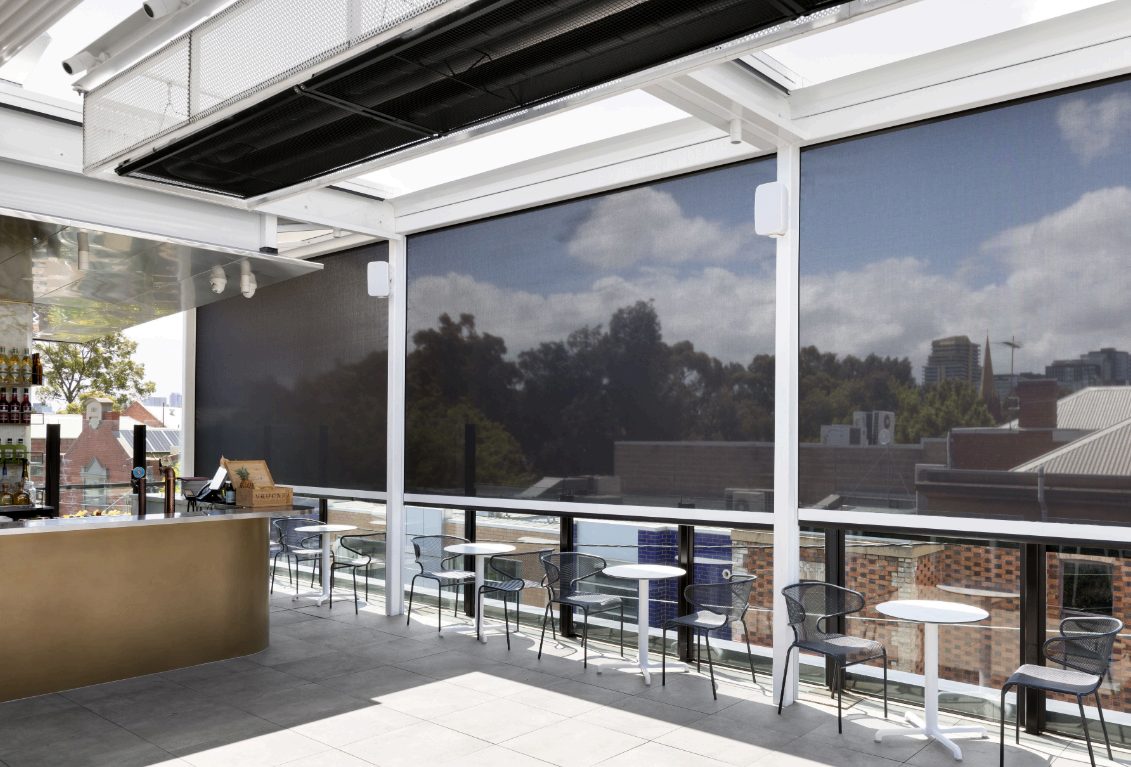
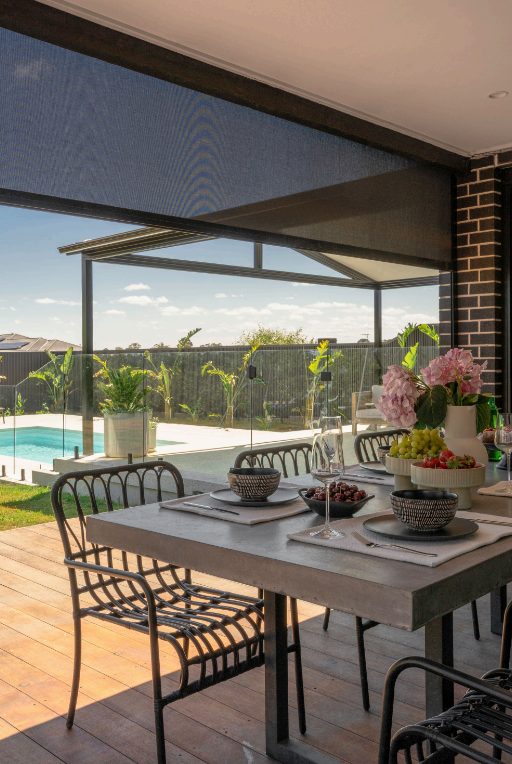
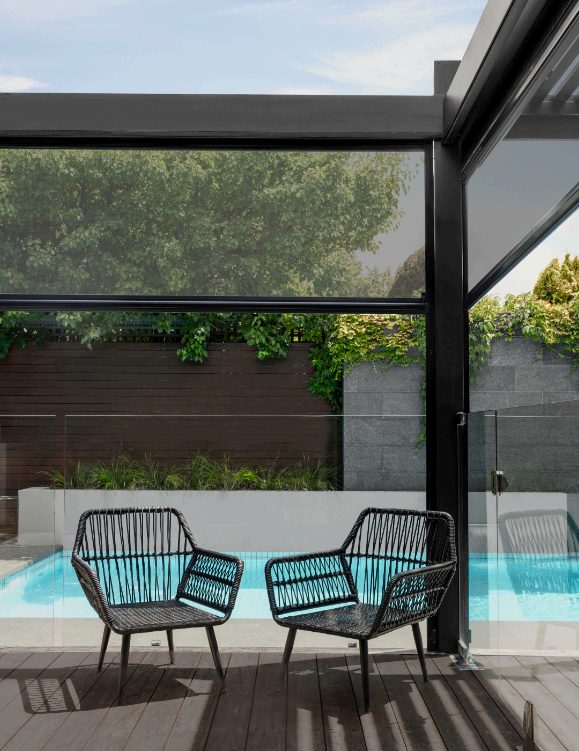
Sunscreen mesh is generally the better fabric for a west-facing opening, because it cuts a significant amount of glare and heat while still letting some airflow through — important on a still, hot Melbourne evening when trapped heat is as much the problem as direct sun.
PVC, by contrast, is better suited to wind and rain protection than heat management, since a sealed panel can hold warmth in rather than letting it move through.
Colour and openness factor
Darker sunscreen fabrics tend to cut more glare, while lighter colours reflect more heat — the trade-off is worth discussing against the specific orientation and how the space is used. "Openness factor," the industry term for how much the mesh weave lets through, also affects the balance between shade, view, and airflow.
Pairing with a folding arm awning for extra shade
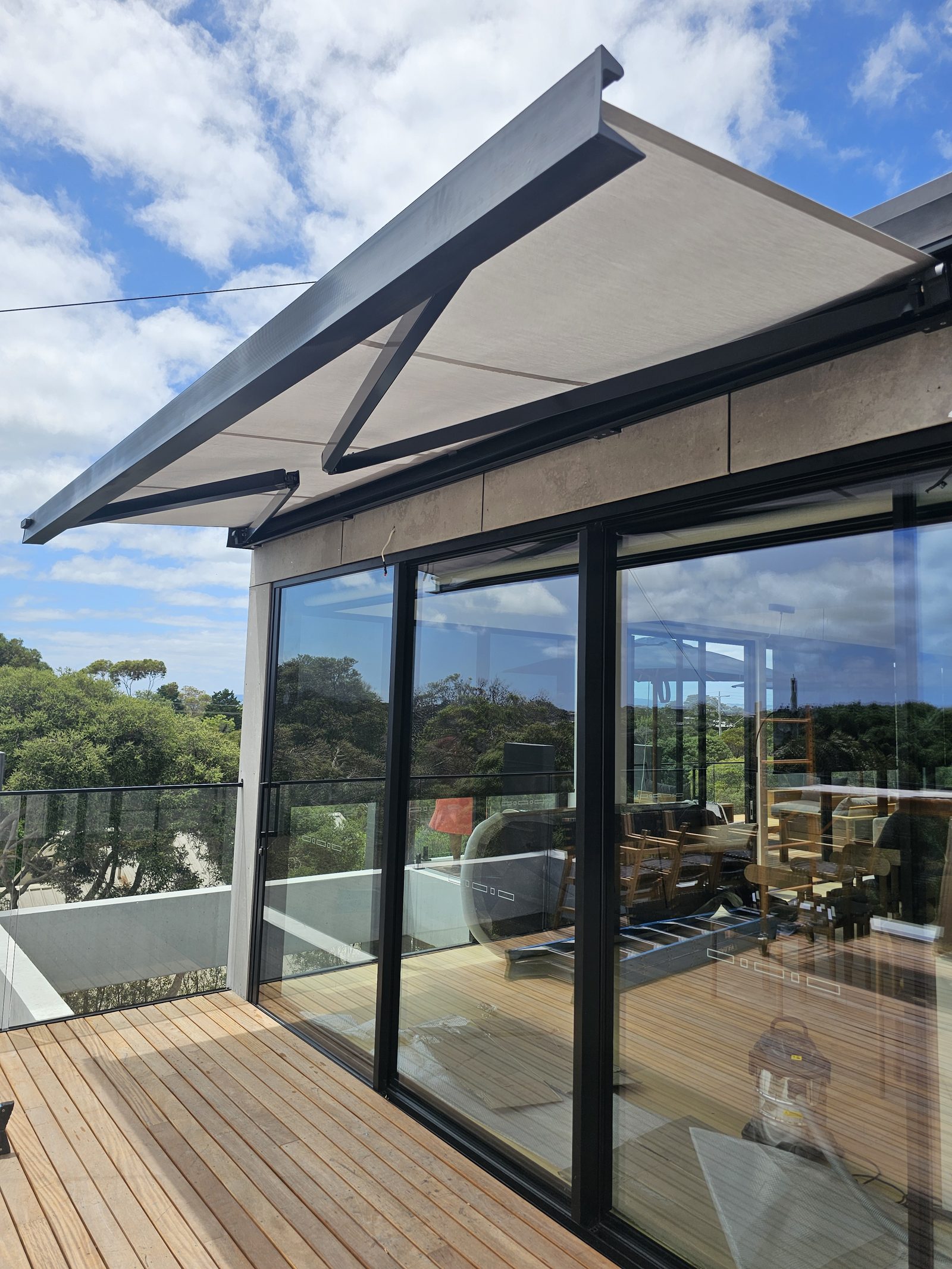
On a west-facing deck or window without a fixed structure overhead at all, a folding arm awning can be extended specifically during the worst of the afternoon sun and retracted once it's passed — giving shade exactly when it's needed rather than a permanent fixture.
Combining fabric choice with layout and orientation
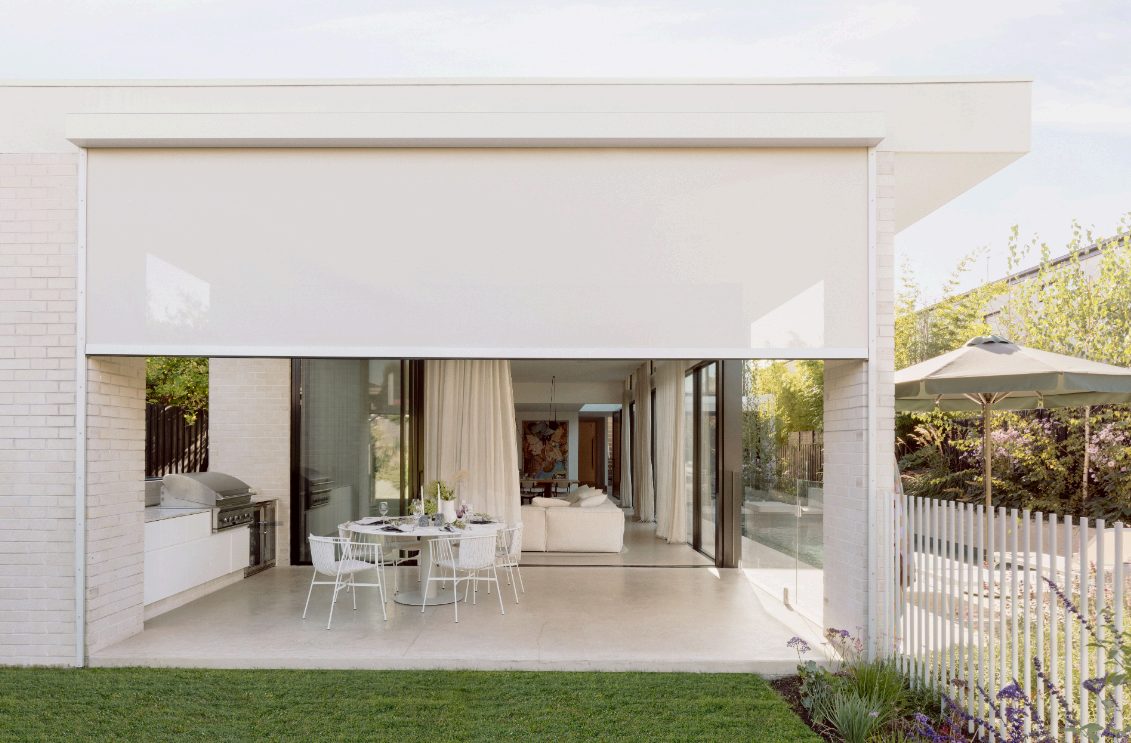
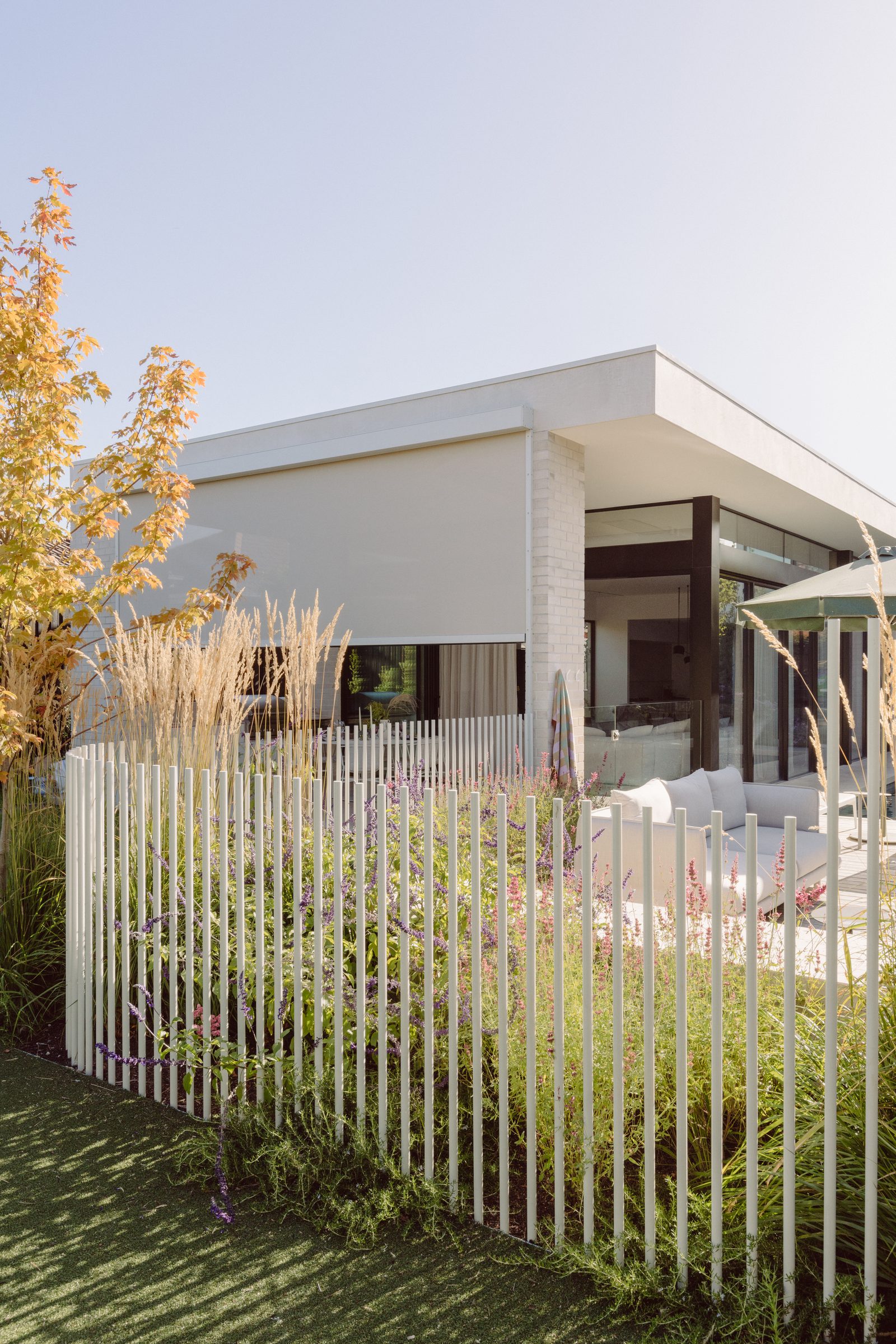
Fabric is only part of the answer — how a blind or awning sits relative to the sun's path through the afternoon matters too. A Zipscreen fitted flush to the opening blocks low sun more completely than an awning angled overhead, simply because it's addressing the sun at the angle it's actually arriving from. For a west-facing space, it's worth discussing both fabric and positioning during a measure, rather than fabric alone.
Caring for fabric exposed to intense UV
West-facing fabric works harder than fabric anywhere else on a home, so it's worth an occasional check for early signs of UV wear — stiffening, colour fade, or small cracks — even before they become obvious. Acrylic and quality sunscreen mesh are chosen specifically for UV stability in Australian conditions, but no fabric is entirely immune to years of harsh afternoon sun, so catching wear early keeps a system performing well for longer.
Signs a west-facing space needs a better shade solution
Rooms or decks that stay noticeably warmer into the evening, furniture or timber decking that's visibly faded on one side, or an outdoor area that quietly falls out of use every summer are all signs that the existing shade — or lack of it — isn't keeping up with what a west-facing aspect actually needs. These are usually straightforward to fix with the right fabric and setup rather than requiring any structural change to the space itself.
Layering shade for the hardest-hit areas
On a particularly exposed west-facing deck or entertaining area, some Melbourne homes get the best result by layering two forms of shade rather than relying on one — a sunscreen mesh Zipscreen for everyday glare and heat reduction, paired with a folding arm awning or shade sail over a specific hot spot like an outdoor kitchen or dining table. It's a bigger investment than a single system, but for a space that's genuinely unusable in summer without it, it's often worth the difference it makes to how much the area actually gets used.
Manual or motorised on a west-facing opening
West-facing blinds tend to get used more than any others on a home, because they're dropped almost every warm afternoon and lifted again once the sun's off the space. That daily rhythm is exactly where motorisation earns its keep — a blind you can lower with a remote or a phone gets used, while a wide or high blind on a hand crank often doesn't. Motorised systems can also run on a schedule, dropping automatically in the late afternoon when the western sun hits, so the space stays comfortable whether or not anyone remembers to do it.
For smaller, easily reached openings, manual operation remains the more cost-effective choice. It's common for a single job to mix the two — motorising the wide or hard-to-reach blinds and leaving the rest manual.
What a measure and quote covers
A Tiptop measure and quote covers more than a single number. Our team assesses the exact opening — width, drop, any obstructions, slope, or wall and fixing type — recommends fabric based on the space's actual sun and wind exposure, talks through manual versus motorised for that specific opening, and leaves you with a clear, itemised price. There's no pressure to decide on the day, and no obligation to proceed. For a west-facing space in particular, seeing the area in the afternoon light it actually deals with makes the fabric recommendation far more useful than one made over the phone.
Frequently asked questions
Do outdoor blinds reduce heat?
Outdoor blinds, particularly sunscreen mesh fabric, meaningfully reduce heat and glare from direct sun by blocking a large portion of it before it reaches the space, while still allowing some airflow through. The effect is strongest on west-facing areas that catch harsh, low afternoon sun.
What is the best blind for a west-facing window or space?
A sunscreen mesh Zipscreen blind is generally the best option for a west-facing space, since it cuts glare and heat from low afternoon sun while preserving some airflow and view. A folding arm awning is a good alternative where the goal is shade only during the worst part of the afternoon.
Related reading
Ready to take the heat out of a west-facing outdoor area? [Book a Free Measure & Quote](/contact) with Tiptop Blinds — in-home, across Melbourne.