Outdoor blinds and awnings solve a similar problem — too much sun, wind or exposure outdoors — but they do it in genuinely different ways. Knowing the difference makes choosing between them a lot easier.
How each system works
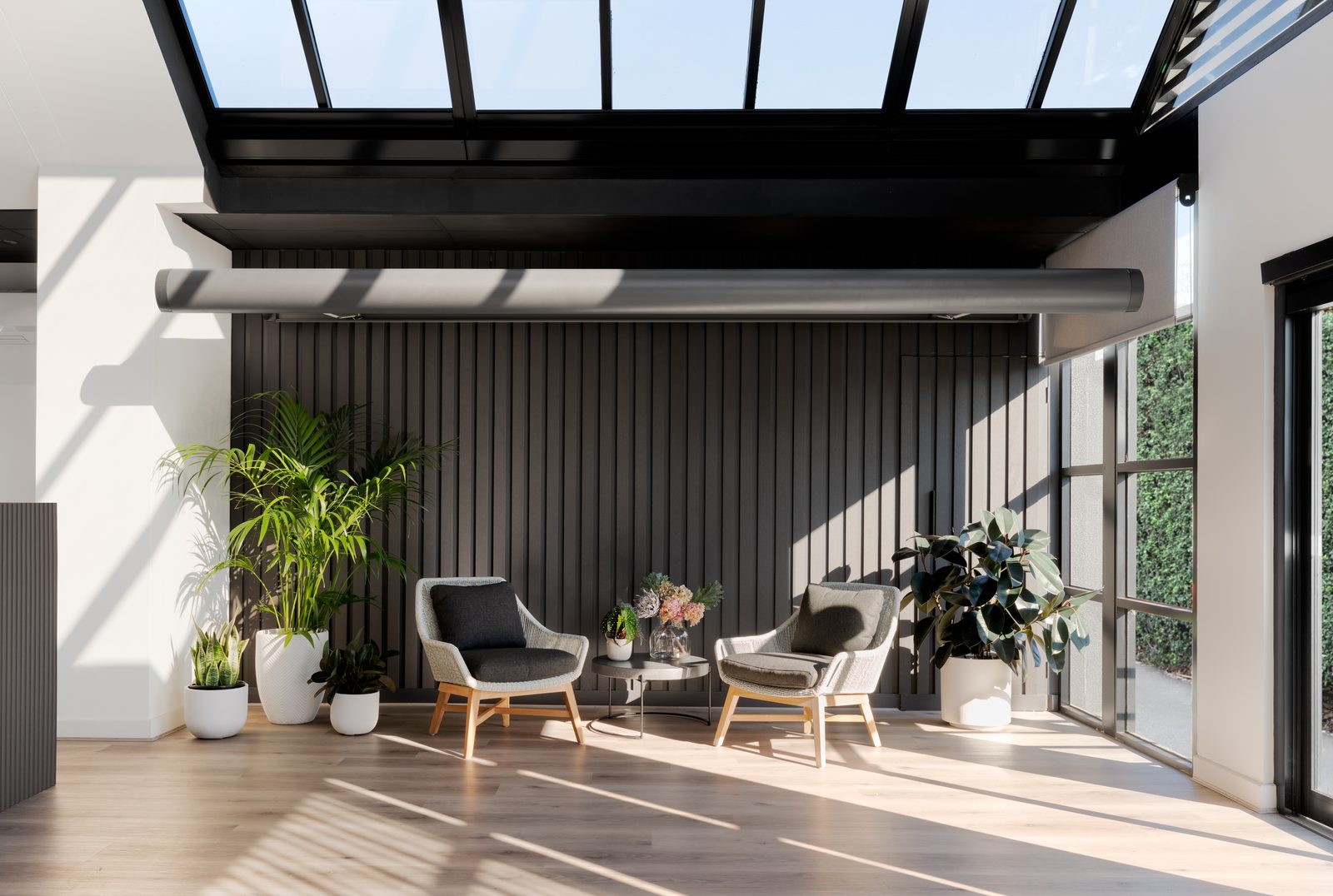
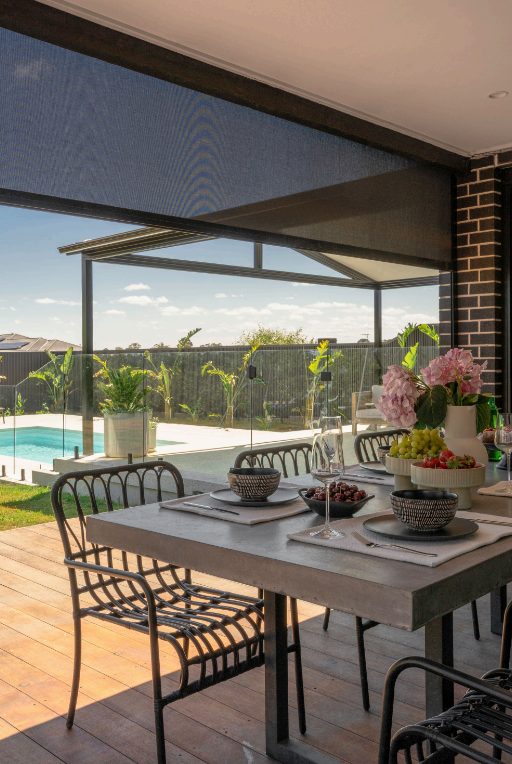
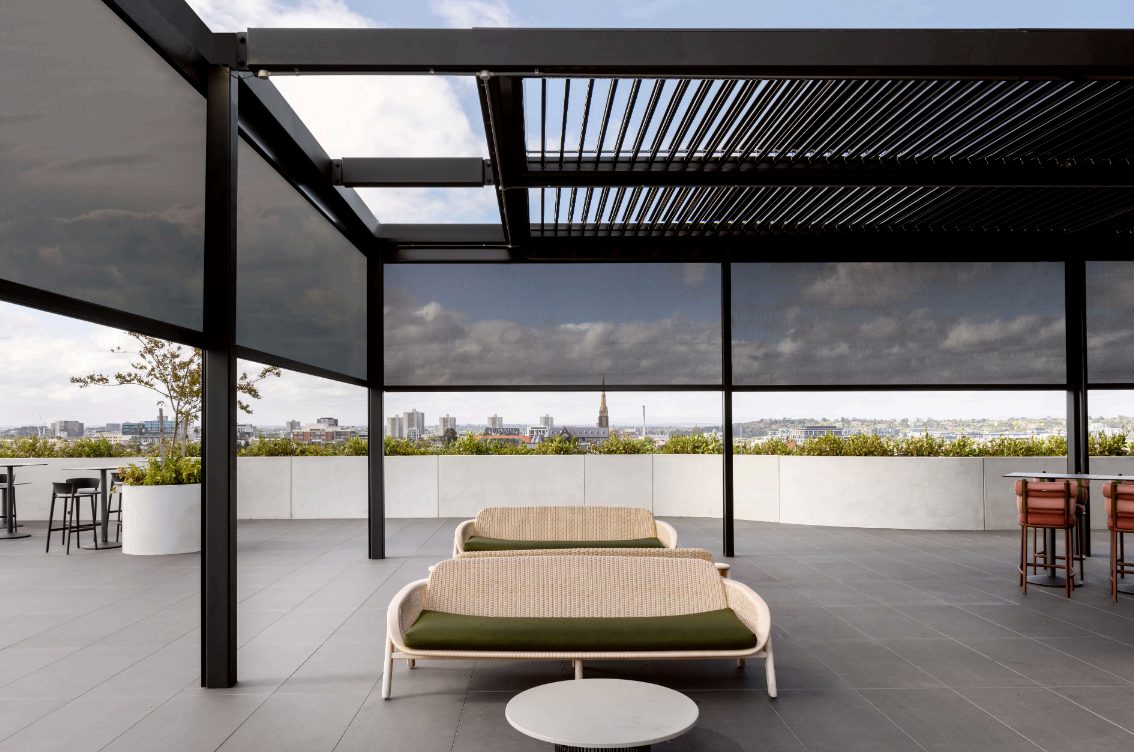
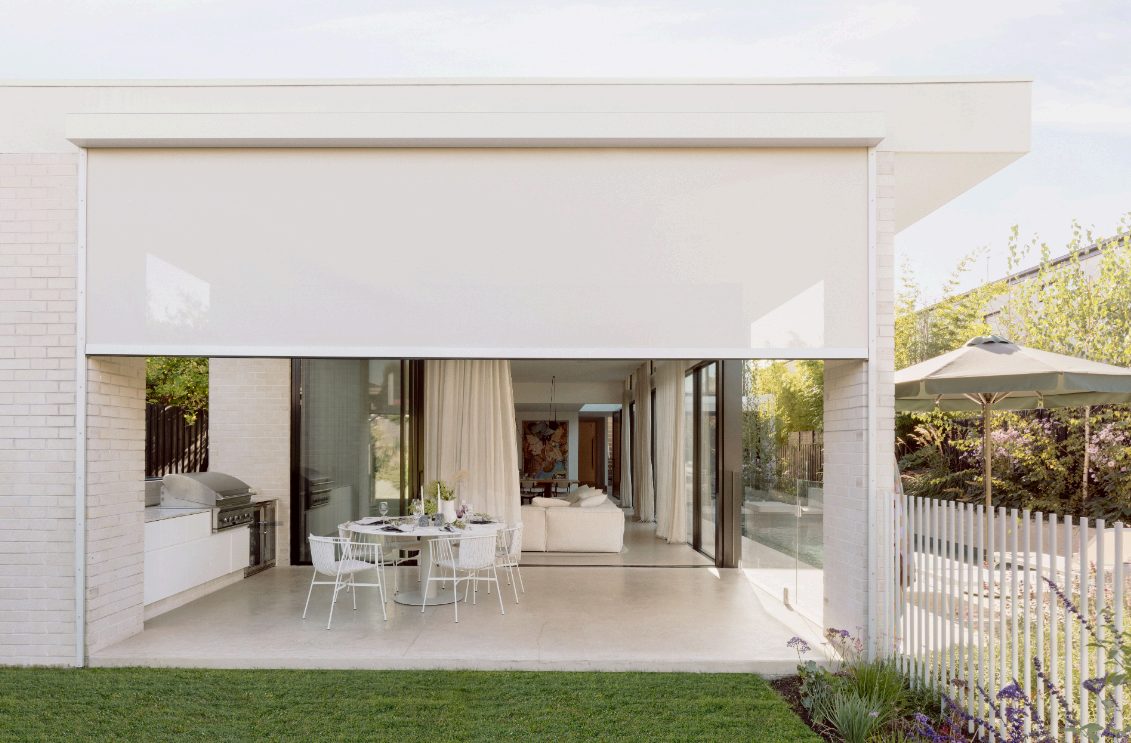
A Zipscreen outdoor blind drops down vertically from above an opening, with the fabric edges locked into a side track. It's built to enclose the opening — sealing a pergola, alfresco area or balcony against wind, glare and rain.
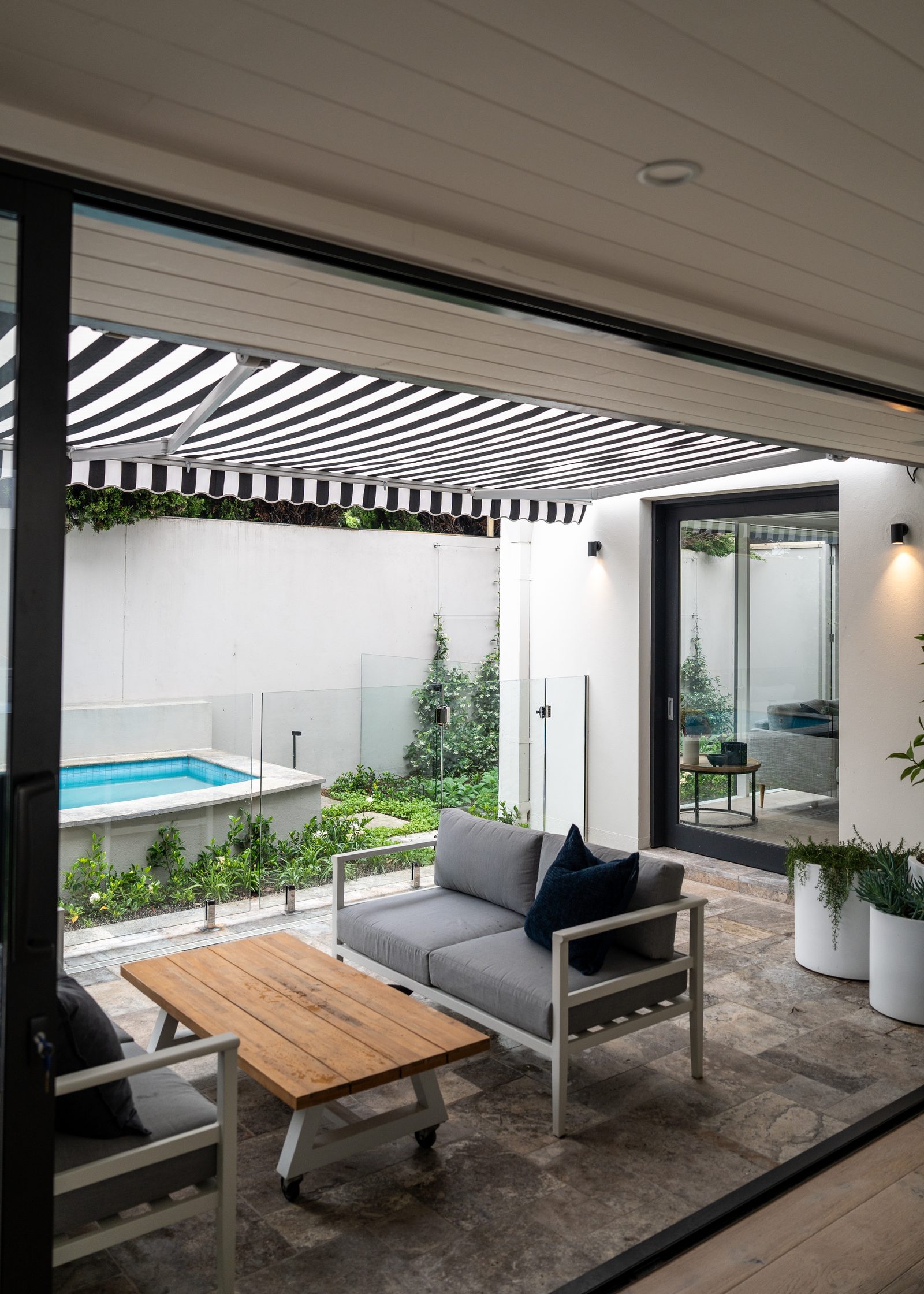
A folding arm awning projects outward from the wall on folding arms, shading the area beneath it without enclosing the sides. It's built to be extended and retracted as the sun moves, rather than sealing a space.
Wind and weather resistance
This is where the two systems differ most. A Zipscreen's tracked edges give it genuine wind resistance because the fabric is locked in place along its full drop. A folding arm awning, being unsupported at its outer edge, generally needs to be retracted in strong wind — which is exactly what an automatic wind sensor is for on a motorised model.
Installation differences
Zipscreen blinds mount their side tracks to the structure on either side of the opening, plus a header box above — meaning the pergola, verandah or wall needs solid fixing points on at least two sides. Folding arm awnings only need a single wall-mounted bracket, which makes them a simpler retrofit onto an existing structure that wasn't originally built with an enclosure in mind.
Coverage: enclosing a space vs shading an opening
If the goal is to fully enclose an alfresco or pergola so it's usable in wind and light rain, a Zipscreen (or several, around the perimeter) is the more complete solution.
If the goal is adjustable shade over a deck, window or portion of a patio — shade you want some days and not others — a folding arm awning does that job well without closing the space in.
Cost comparison
Pricing for both depends heavily on size and motorisation, so a direct dollar comparison isn't meaningful without measurements. As a general rule, enclosing a full space with multiple Zipscreen blinds costs more overall than shading one opening with a single awning, simply because more product and track are involved.
When Melbourne homes use both together
It's common to see both systems on the one property — Zipscreen blinds enclosing the sides of an alfresco area, with a folding arm awning shading a nearby window or a section of open deck. Each is doing the job it's actually built for, rather than asking one product to do both.
A quick decision checklist
If wind resistance and fully closing off a space matter most, lean toward a Zipscreen. If flexibility — shade on demand, retracted the rest of the time — matters most, lean toward a folding arm awning. If the space needs both (enclosed on the exposed side, adjustable shade elsewhere), it's common and sensible to use one of each rather than trying to make a single product do both jobs.
Getting the right combination for your space
Because the right answer genuinely depends on the layout, orientation and how a space gets used, it's worth having both options assessed together during a single measure and quote rather than deciding in the abstract. Tiptop can walk through a space and recommend blinds, awnings, or a combination based on what will actually get used, not just what looks right in a brochure.
Cost and running comparison
Price for both products comes down to size, fabric and whether you motorise. As a general rule, a single Zipscreen blind covering one opening and a folding arm awning of similar width sit in comparable territory, but the totals diverge once you look at the whole space. Enclosing a three-sided alfresco means three blinds. Shading the same area with one awning means one unit. That difference in count, rather than the price of any single item, is usually what separates the two quotes.
Running costs are minimal for both. Motorised units draw very little power, and neither product needs servicing on a fixed schedule — just a clear track, clean fabric and sensible use in strong wind.
Which lasts better in a Melbourne backyard
Both products are built for outdoor use, but they age differently. A zip-track blind spends most of its life in a protected channel and is rolled up into a headbox when not in use. A folding arm awning has moving arms and a larger span of exposed fabric, so it benefits from being retracted whenever the weather turns. A full cassette awning closes the fabric away completely and holds up especially well for that reason. In both cases, the biggest factor is not the product — it's whether it gets retracted when the wind picks up.
Matching the product to the structure you already have
The structure over your outdoor area often narrows the choice on its own. A solid roofed verandah or a built pergola gives you posts and beams on either side, which is exactly what Zipscreen tracks need to fix to. An open deck or a bare wall with nothing above it gives an awning something to mount to and a blind almost nothing.
If you're still at the planning stage of a build or renovation, this is worth raising early. Adding a beam or a post in the right place while the structure is going up costs very little, and it keeps both options open when the time comes to fit the shade.
Frequently asked questions
What is the difference between an awning and outdoor blind?
An outdoor blind like a Zipscreen drops down vertically and locks into a side track to enclose an opening against wind and weather, while an awning projects outward on folding arms to shade the area beneath it without enclosing the sides. Blinds suit enclosing a space; awnings suit adjustable overhead shade.
What is the best awning for a patio?
A folding arm awning is generally the best choice for shading a patio you use at varying times of day, since it can be extended or retracted as needed. If the patio also needs protection from wind and rain rather than just sun, a Zipscreen outdoor blind or a combination of both is worth considering.
Related reading
Not sure whether a blind, an awning, or both suit your space? [Book a Free Measure & Quote](/contact) with Tiptop Blinds — we'll talk it through in person, anywhere across Melbourne.