A folding arm awning is one of the most flexible outdoor shading options available, precisely because it isn't always out. You extend it when you want shade, and retract it when you don't.
What is a folding arm awning?
A folding arm awning is a wall-mounted awning with two folding support arms that extend the fabric out and away from the building, then fold back in when the awning is retracted.
Unlike a fixed awning, it's designed to be adjusted throughout the day — extended for afternoon shade, retracted to let winter sun in, or pulled back entirely in strong wind.
Full cassette, semi-cassette and open arm
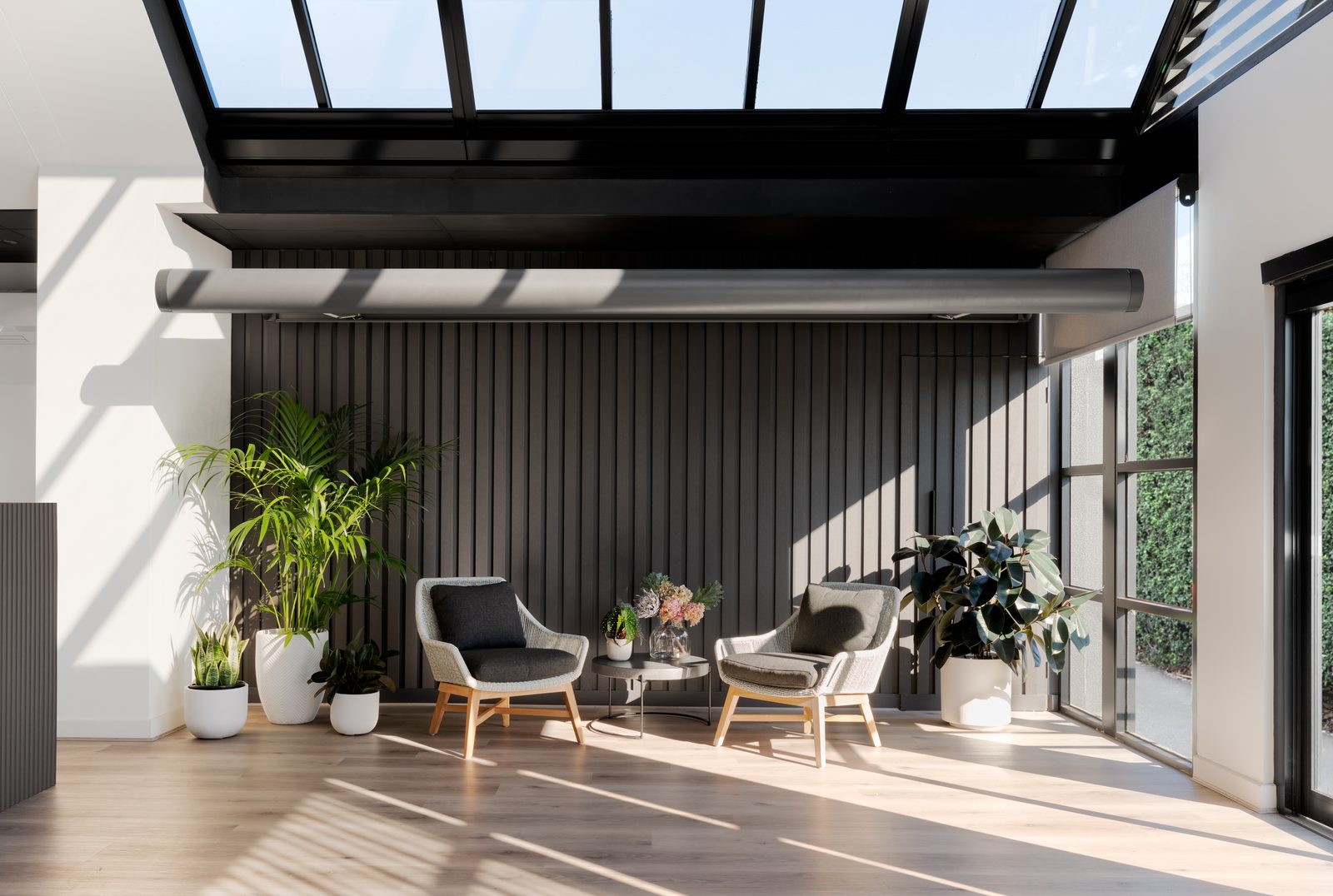
Full cassette awnings roll the fabric and arms completely inside a protective housing when retracted, which keeps the fabric cleaner and better protected from weather over time.
Semi-cassette awnings offer partial protection — a good middle ground between cost and fabric longevity.
Open arm awnings have no housing at all, which keeps the cost down but leaves the fabric more exposed when rolled up.
Which one makes sense usually comes down to budget and how much you want to protect the fabric long-term.
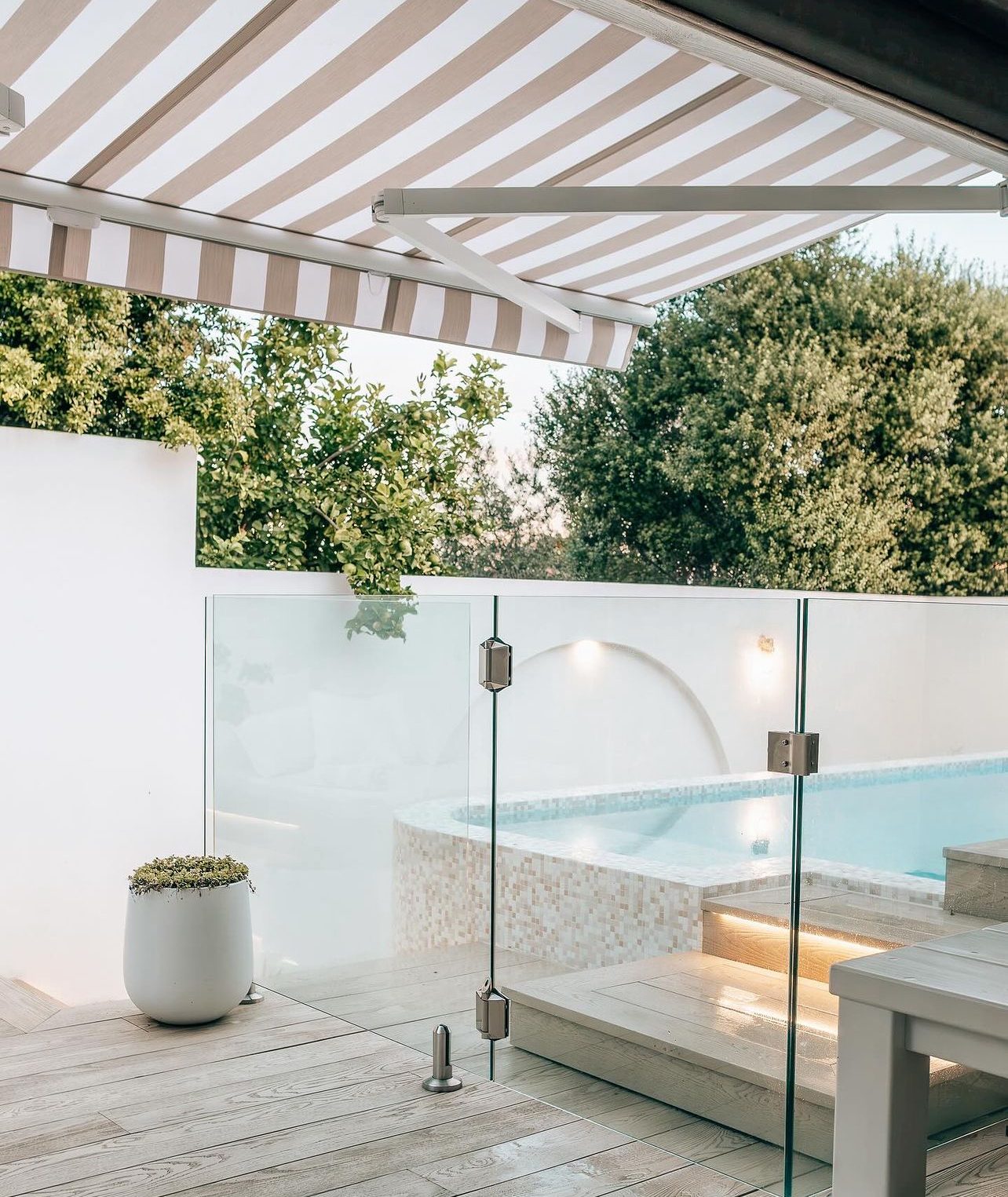
Motorised (auto) vs manual
A manual folding arm awning is operated with a hand crank. It's a reliable, lower-cost option, particularly for smaller awnings that are easy to reach.
A motorised — or "auto" — awning is operated with a remote, wall switch, or smart-home app. Many motorised systems also support a wind sensor, which retracts the awning automatically if it gets too gusty for the fabric and arms to handle safely — a genuinely useful feature given how quickly Melbourne weather can turn.
Wall-mounted placement and arm reach
Folding arm awnings are mounted to an external wall and project outward, so they suit spaces where you want adjustable shade over a window, deck, or portion of a patio, rather than a fully enclosed area.
Arm length determines how far the awning projects — longer arms give more shade but need a sturdier mounting point and more careful wind management.
Installation: what to expect
Installing a folding arm awning involves securing a mounting bracket to the wall structure — brick, render or timber framing all need slightly different fixings — then attaching the awning housing, arms and fabric before final adjustment and testing. For a motorised awning, this also includes running power to the mounting point, which is worth planning for early if you're renovating or building a deck. Tiptop handles the full installation as part of the job, measured and fitted specifically to your wall and opening.
Fabric and colour options
Awning fabrics are typically acrylic, chosen for UV resistance and colourfastness in Australian sun. Lighter colours reflect more heat; darker colours and patterns tend to hide weathering for longer. The right choice is largely a style decision once the practical shading need is met.
Caring for your folding arm awning
A folding arm awning that's looked after tends to perform well for years. Retracting it in strong wind (or letting a wind sensor do it automatically), giving the fabric an occasional wash with mild soap and water, and keeping the arms and mechanism free of debris are the main things that keep it working smoothly. Full cassette housings do a lot of this protective work automatically by sealing the fabric away when not in use.
Who a folding arm awning suits best
Folding arm awnings suit homes that want shade on demand rather than a permanent fixture — a north- or west-facing window that only needs blocking out in the afternoon, a deck used for entertaining on weekends, or a café-style area where the amount of shade needed changes through the day. If the goal is closing a space off completely rather than shading it on and off, a Zipscreen outdoor blind is usually the better starting point instead.
Choosing the right size and projection
The two measurements that matter most are width and projection. Width is how far the awning runs along the wall, and projection is how far it reaches out from the house. A common mistake is choosing a projection that shades the wall and the doorway but leaves the actual table and chairs sitting in full sun by mid-afternoon.
The simplest way to get this right is to watch where the shadow falls in your space at the time of day you use it most. An awning shading a west-facing deck at 5pm needs more projection than one shading a north-facing window at midday, because the lower the sun sits, the further the shade has to reach. Our team works this out on site during the measure so the awning is sized for the way you actually use the area, not just the size of the wall.
Manual or motorised
Manual awnings are wound out with a crank handle and suit smaller spans that are easy to reach. Motorised awnings run on a remote or wall switch and make far more sense on wide awnings, high walls, or anywhere the crank would be awkward to use. Once an awning is easy to operate, it gets used — and an awning that gets used every afternoon is worth considerably more than one that stays closed because opening it is a chore.
Frequently asked questions
What is the best awning for a patio?
A folding arm awning is a strong choice for a patio because it can be extended for shade when needed and retracted when it isn't — useful over a space you use at different times of day. The best specific option depends on the patio's size, sun direction and how much wind exposure it gets.
What is the difference between an awning and outdoor blind?
An awning is mounted above an opening and projects outward on folding arms to shade the area below, while an outdoor blind like a Zipscreen drops down vertically to shade or enclose an opening. Awnings suit adjustable overhead shade; outdoor blinds suit enclosing a space against wind, sun or view.
Related reading
Thinking about a folding arm awning for your home? [Book a Free Measure & Quote](/contact) with Tiptop Blinds — in-home, across Melbourne.