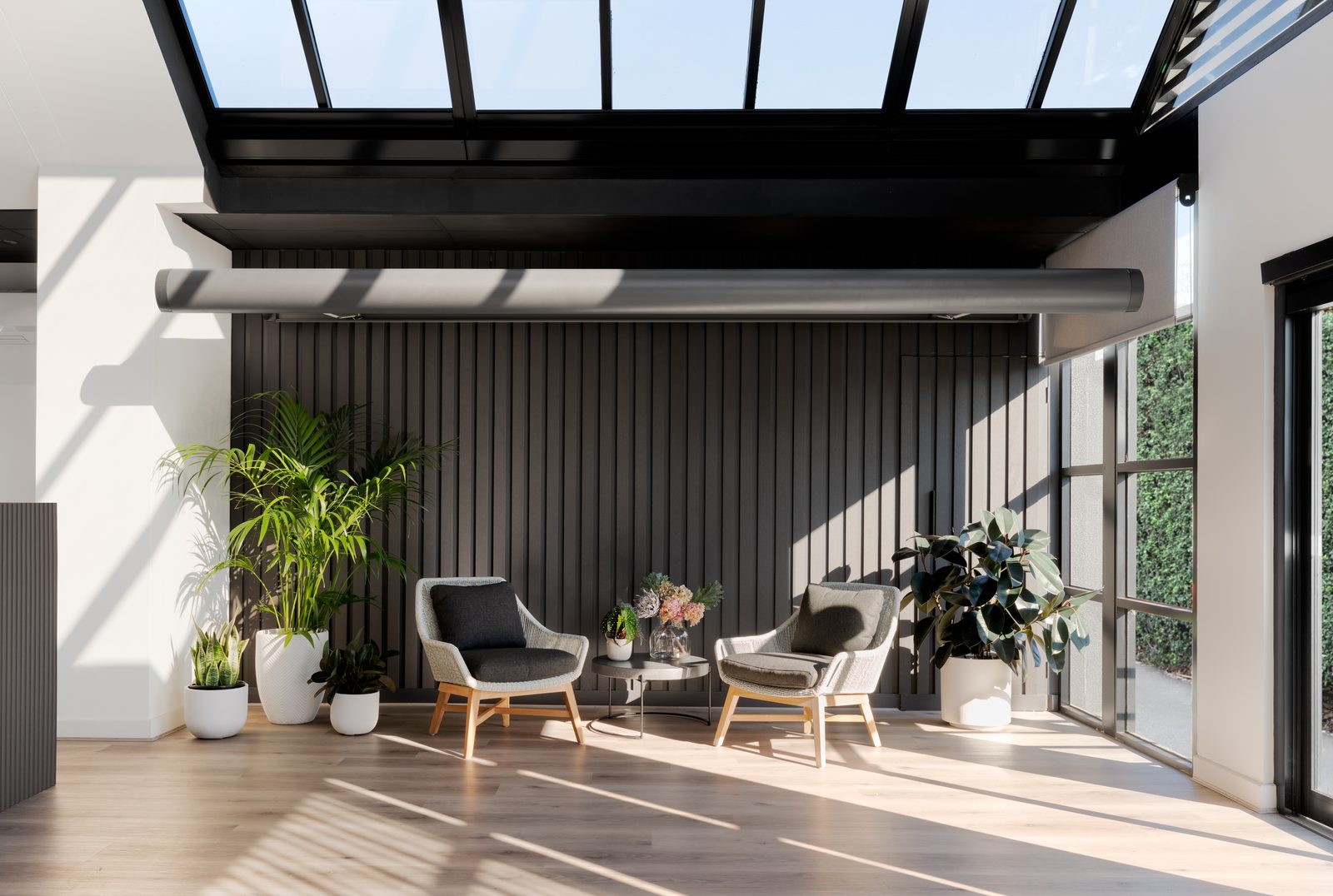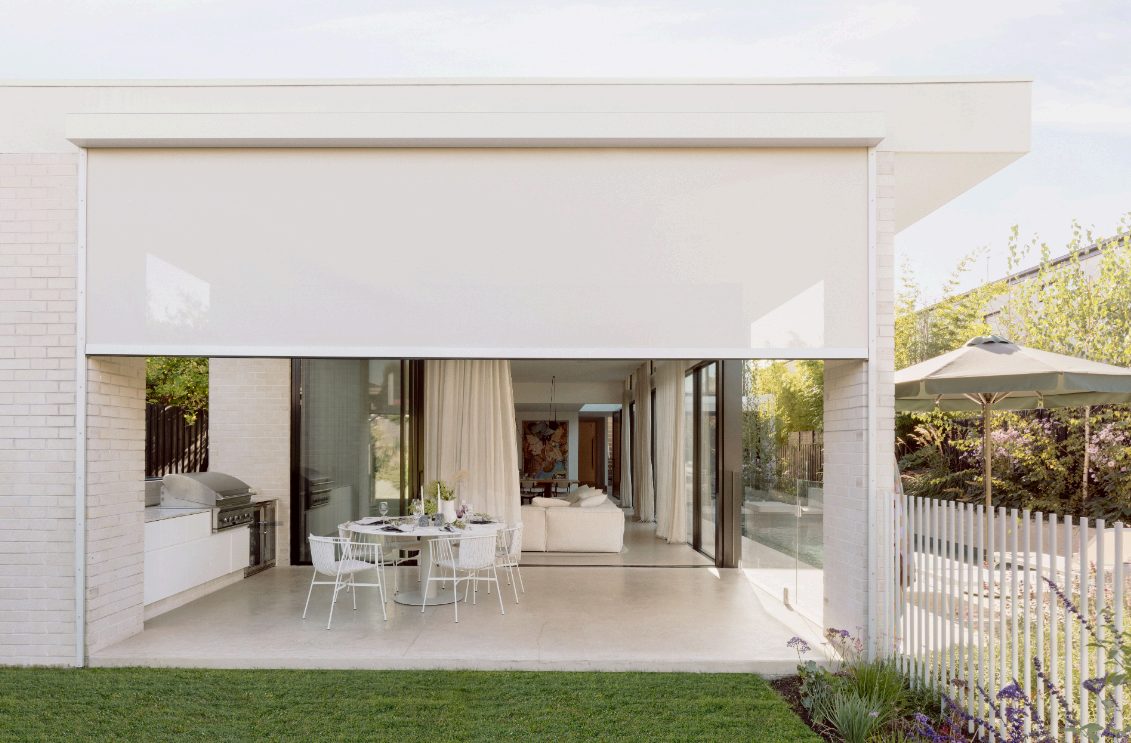
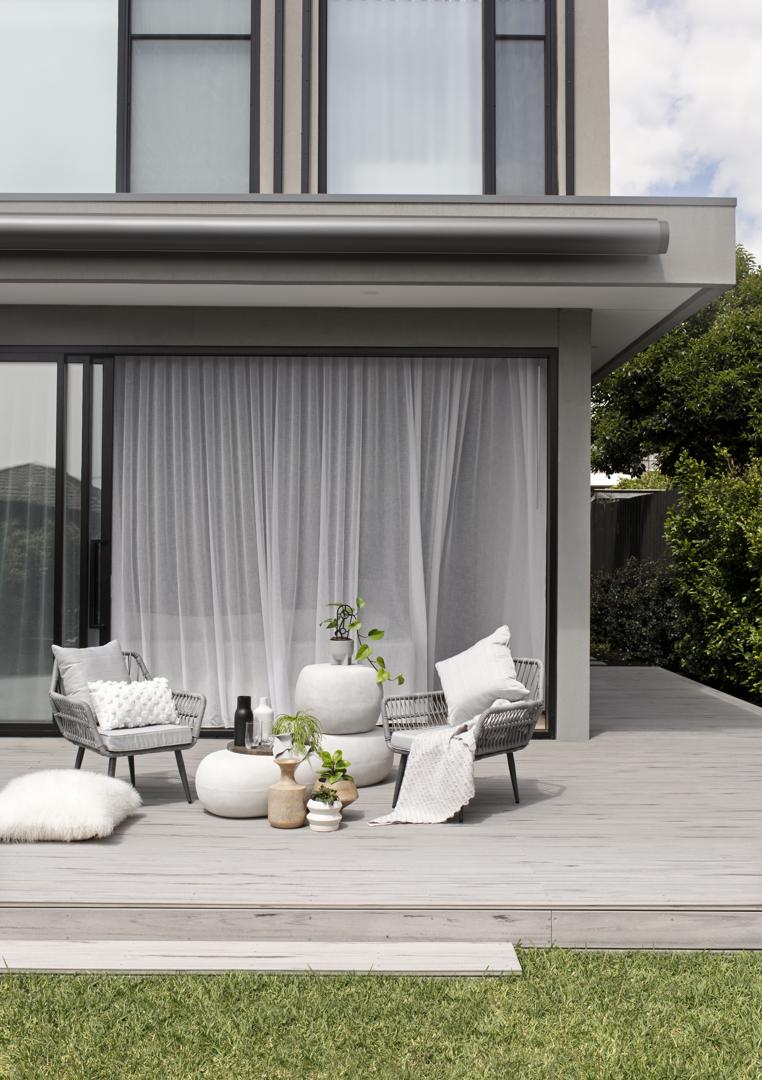
Folding arm awnings, also known as retractable awnings, extend outward without vertical supports using articulated arms. Patio awnings are fixed structures requiring posts or wall attachment. Somfy motorisation systems power many folding arm models, offering automated sun tracking. Folding arm designs provide the most flexible coverage, retracting fully to protect the fabric during harsh weather.
Folding arm awnings mount directly to a wall and extend outward on articulated arms. Patio awnings attach to a fixed frame structure. Because folding arm awnings retract fully when not in use, they are also commonly referred to as retractable awnings — the two terms describe the same product category. All three types reduce heat at the glass, but folding arm models offer the greatest projection flexibility for Melbourne homeowners.
What Makes Each Awning Type Distinct?
Awning types differ primarily in how they mount, how they move, and what kind of space each one suits best. Folding arm awnings and drop arm awnings are the two most common styles, yet each serves a distinct purpose for Melbourne homeowners.
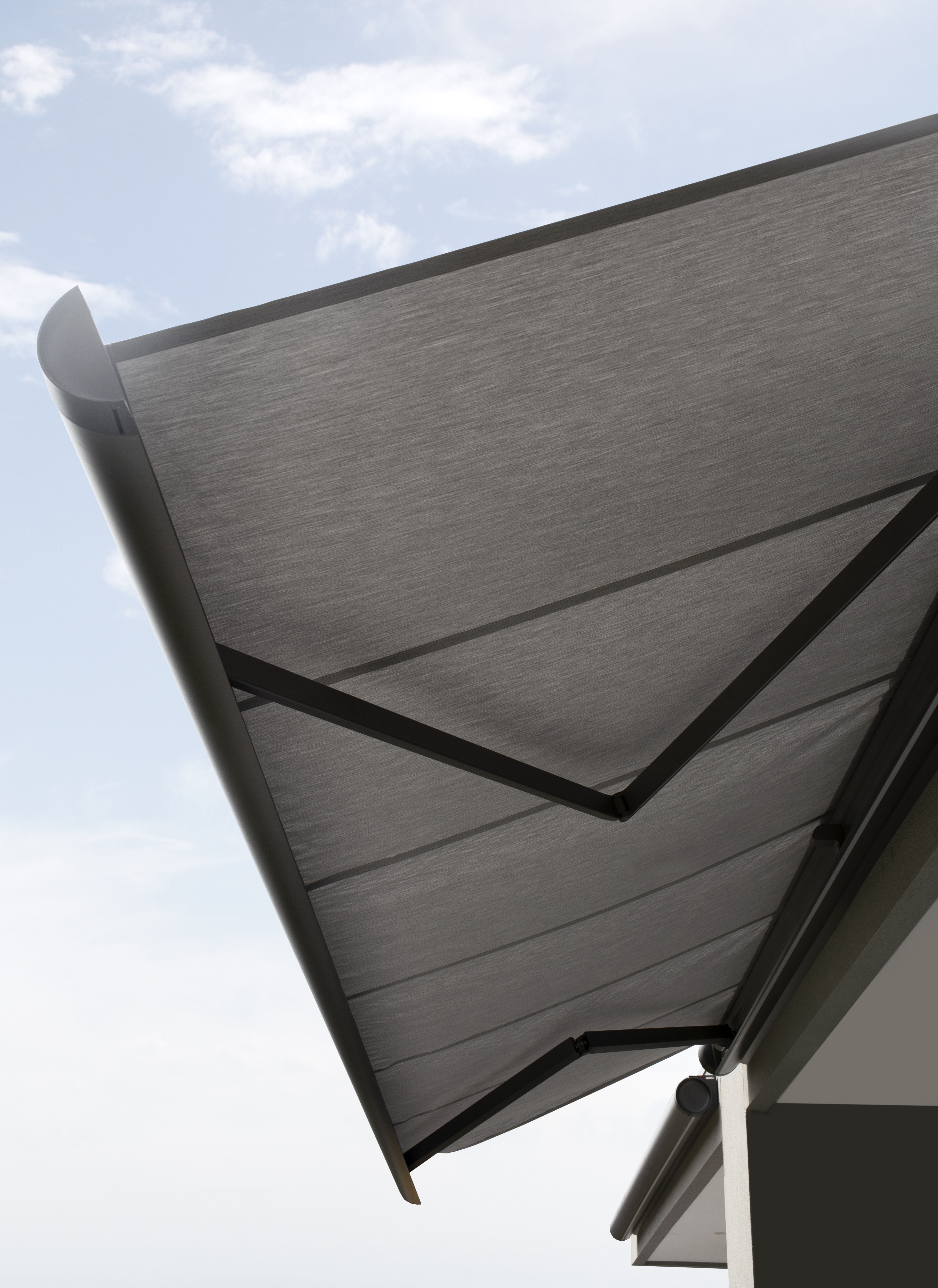
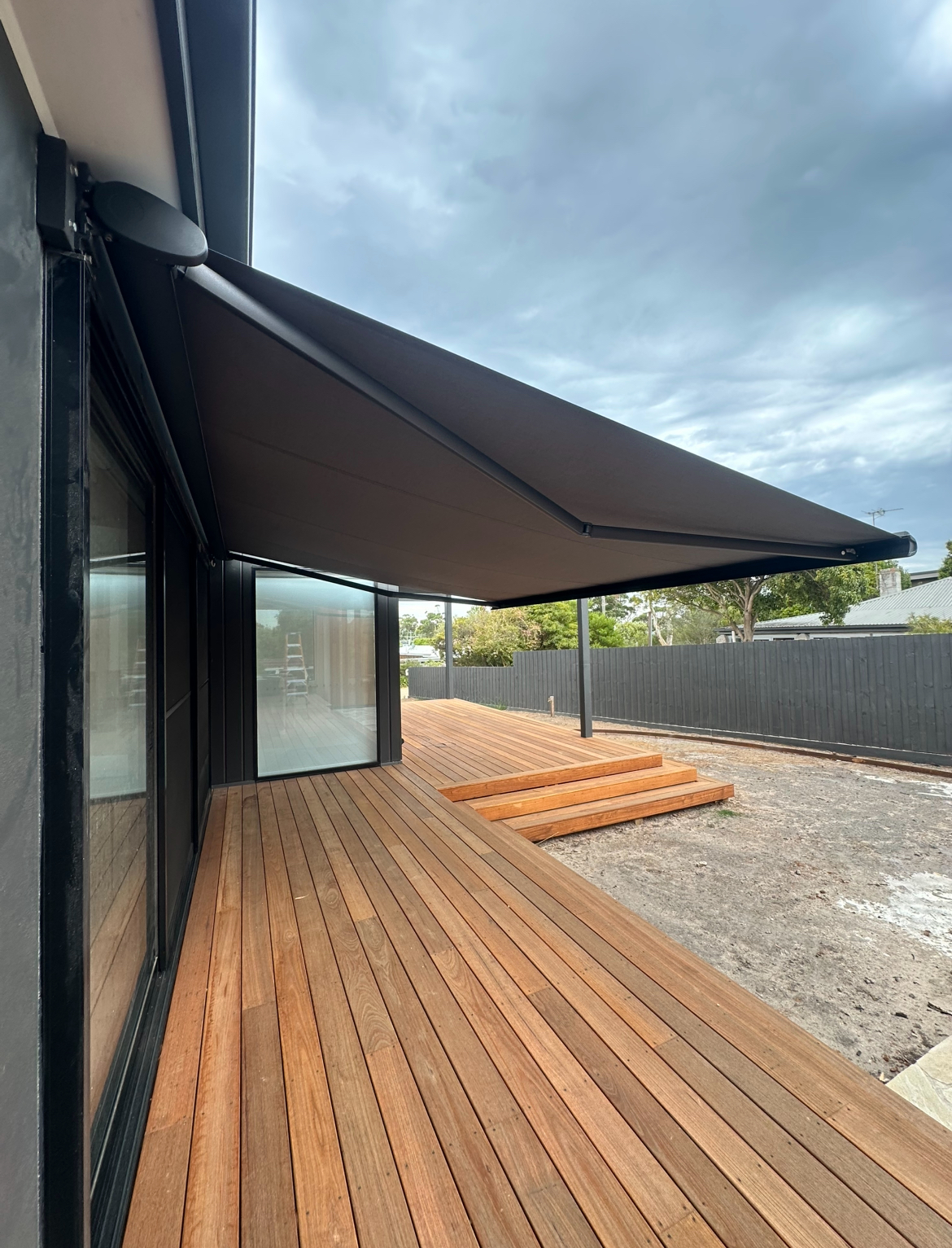
Folding arm awnings attach directly to a wall or soffit. Motorised or crank-driven arms push a tensioned fabric skin outward over an entertaining area, then pull it back into a compact cassette when not in use. The result is unobstructed floor space — no posts, no columns, nothing interrupting the outdoor area below.
Drop arm awnings, by contrast, hang vertically rather than projecting horizontally. Each style solves a different problem.
| Feature | Folding Arm Awning | Drop Arm Awning |
|---|---|---|
| Projection direction | Horizontal | Vertical |
| Post-free floor space | Yes | Yes |
| Primary use | Overhead shade | Side/window shade |
| Drive options | Motor or crank | Motor or crank |
Which awning type works best for an open patio?
Folding arm awnings are the stronger choice for open patios where post-free floor space matters. The arms extend outward from the wall, covering large entertaining areas without any structural supports interrupting the ground level.
Does Tiptop Blinds manufacture its own awnings?
Tiptop Blinds manufactures retractable awnings and other window furnishings at our own Clayton factory. Factory-direct production removes the middleman, which translates directly into competitive pricing for customers.
How Do These Awnings Perform in Real Conditions?
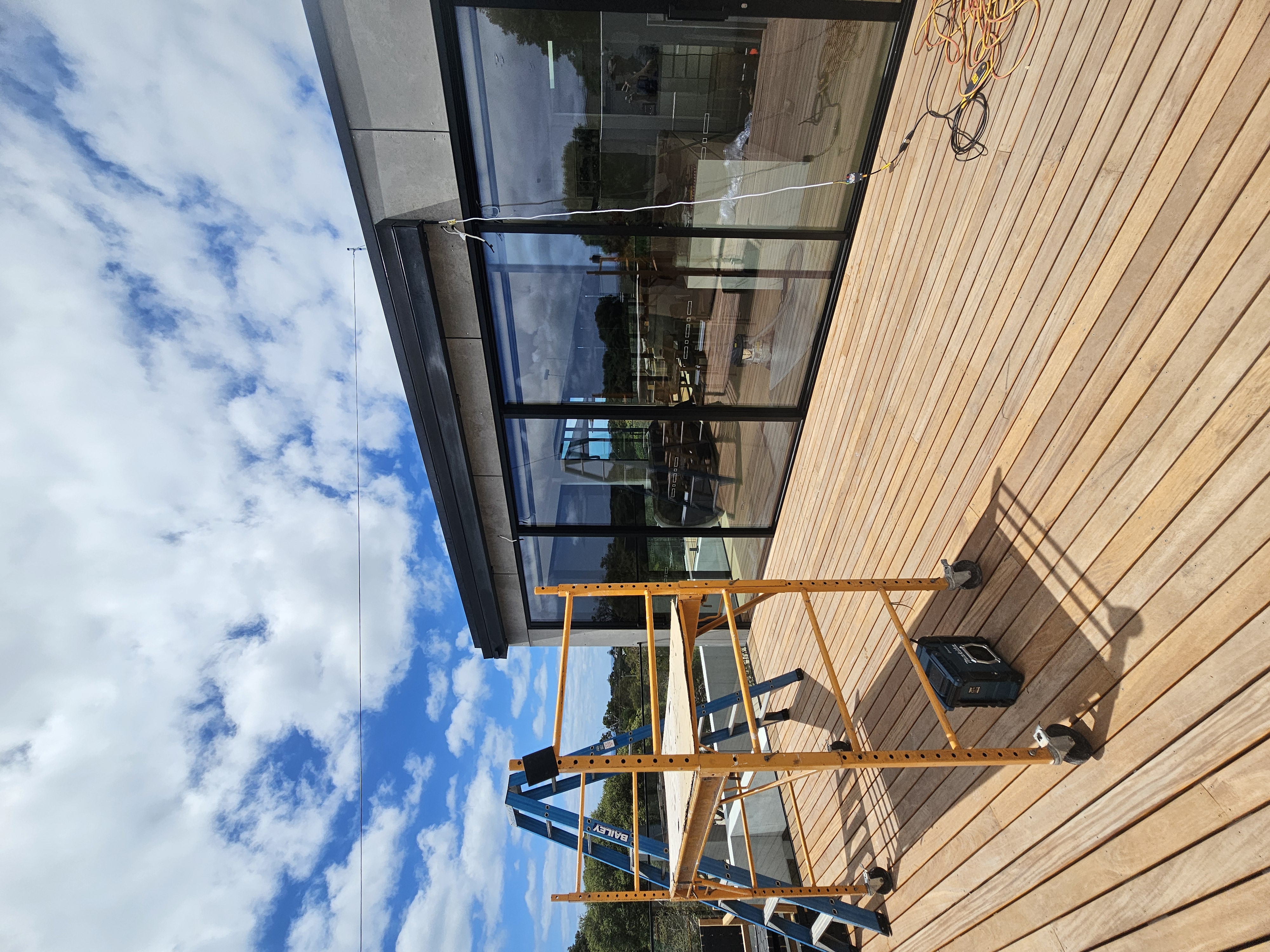
Folding arm awnings and retractable awnings are structural additions to a home — not decorative accessories. Both product categories face UV radiation, wind stress, and coastal salt exposure for a decade or more, making real-world performance the deciding factor for Melbourne homeowners.
What Wind Rating Should Homeowners Look For?
Quality folding arm awning models are tested to the European EN 13561 wind standard. Many carry a Wind Class 2 rating, equivalent to Beaufort Scale 5 — fresh-breeze conditions. That rating matters. An awning installed without the right wind classification for its location risks premature fabric wear and structural stress.
What Separates a Reliable Installation From a Costly Regret?
Five factors determine long-term performance:
Skimping on any single factor compounds problems across the others. A premium fabric paired with a poorly anchored arm still fails.
Tiptop Blinds addresses these awning types with premium materials and expert craftsmanship, backed by comprehensive warranties. That combination protects the investment homeowners make from day one.
Which Awning Type Is Right for Your Home?
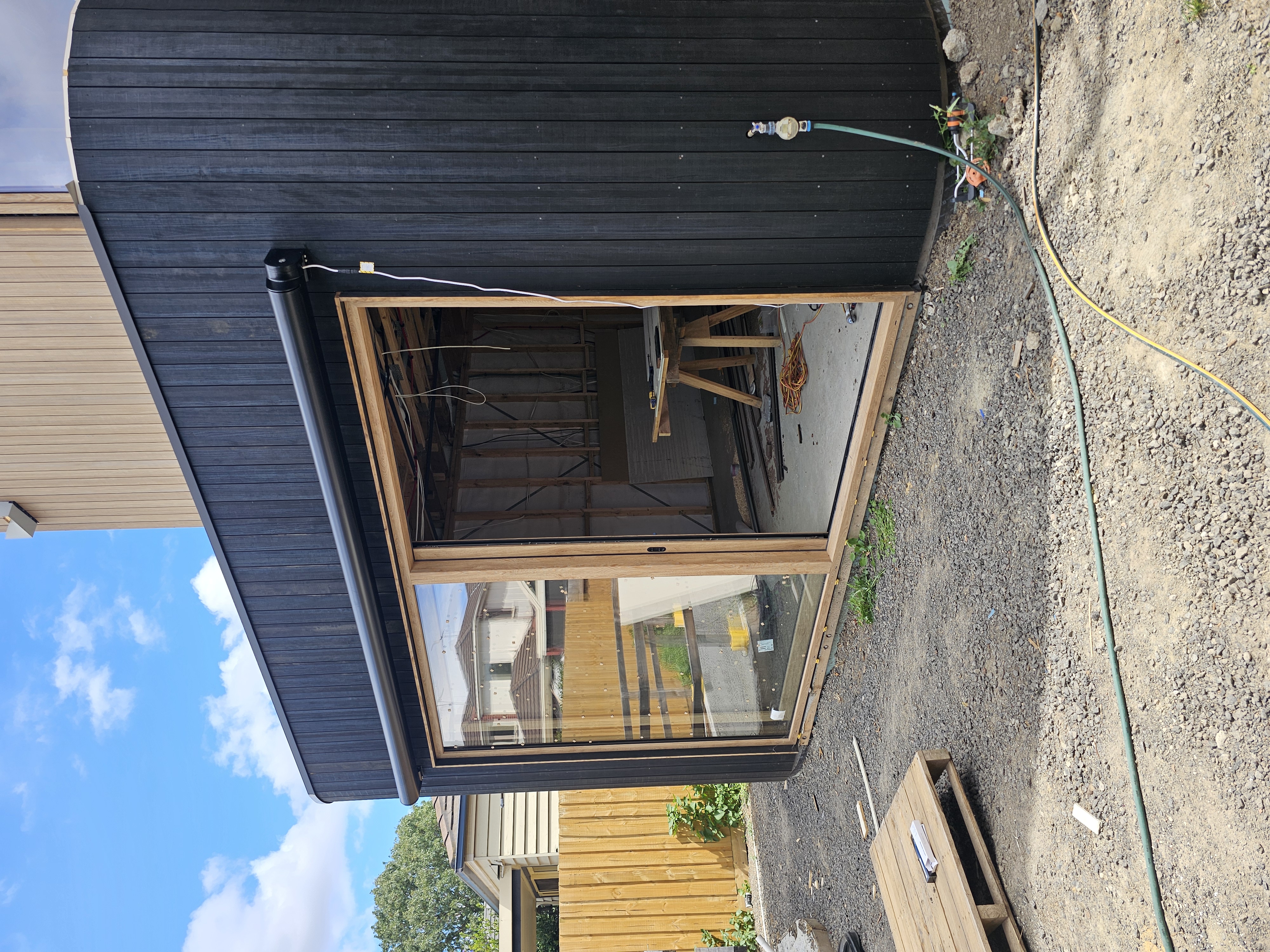
Choosing between awning types depends on the specific demands of a property, not personal preference alone. Both folding arm awnings and drop arm awnings shelter a home from summer heat effectively. Yet key structural and functional differences make each better suited to distinct situations.
What Makes Folding Arm Awnings Different From Drop Arm Awnings?
Folding arm awnings extend horizontally over an outdoor area, projecting shade across patios and alfresco spaces without requiring support posts. Drop arm awnings angle downward from a fixed head rail, making them better suited to windows and vertical façades where glare control is the primary goal. The right choice depends on whether the priority is overhead shade or side-on sun protection.
How Do Homeowners Choose the Right Awning Solution?
No two properties share identical sun exposure, wall configurations, or entertaining layouts. The differences between awning styles mean a solution ideal for one home may be entirely wrong for another.
| Factor | Folding Arm Awning | Drop Arm Awning |
|---|---|---|
| Primary use | Patio / alfresco shade | Window / façade glare control |
| Projection direction | Horizontal | Angled downward |
| Post-free coverage | Yes | Yes |
| Motorisation | Common | Common |
Book a Free In-Home Measure & Quote
Every home is different, and the right awning depends on your wall structure, sun path and how you use your outdoor space. Our team measures on-site, recommends the right product, and quotes with factory-direct pricing.