Motorisation is one of the most common questions we get on outdoor blinds and awnings — is it a genuine improvement, or a nice-to-have that isn't worth the extra cost?
How motorisation works on each system
On a Zipscreen, a motor built into the roller tube raises and lowers the blind at the press of a button, rather than turning a hand crank.
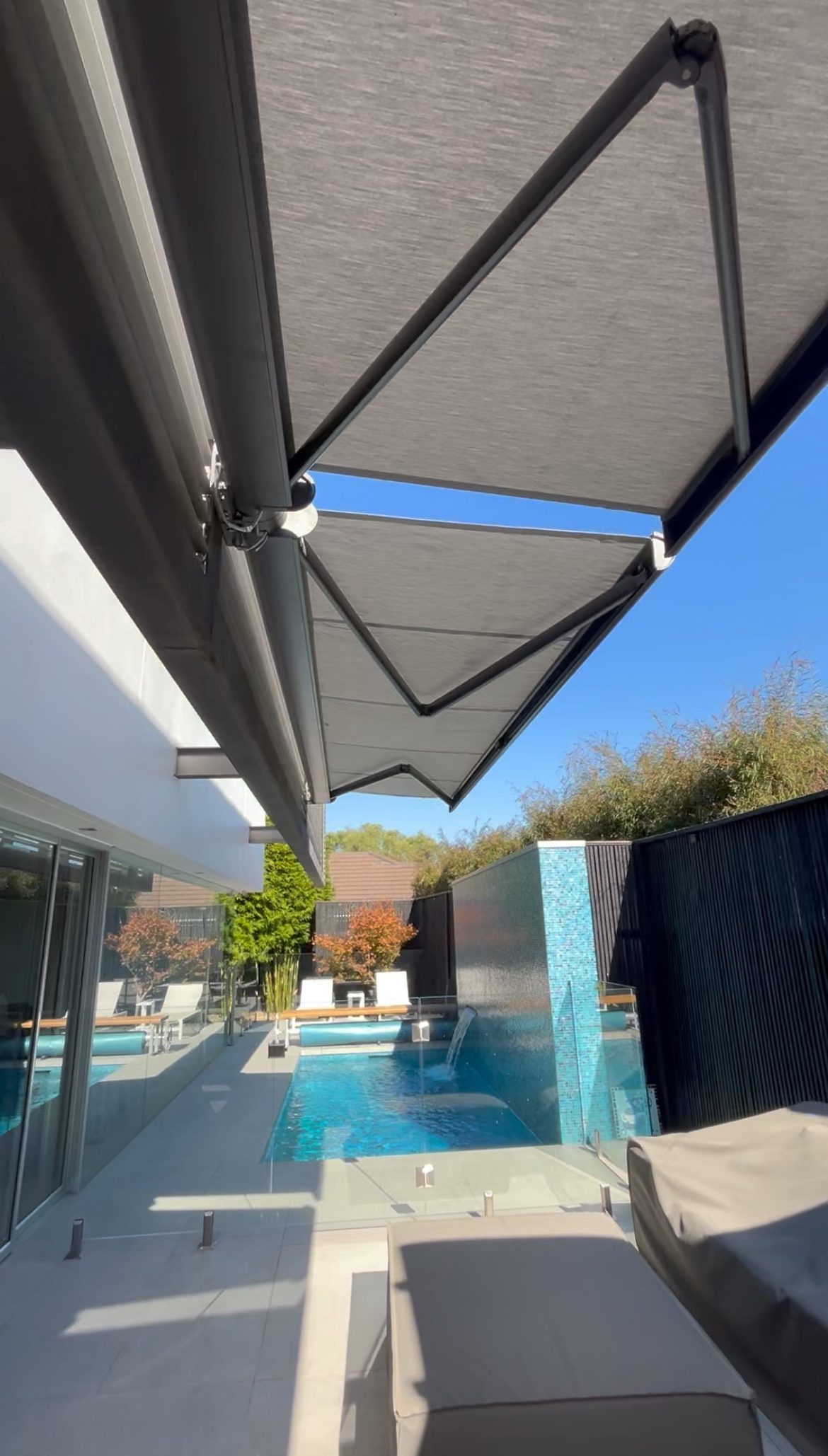
On a folding arm awning, the motor extends and retracts the arms and fabric, replacing the manual crank entirely.
Both can be controlled by a wall switch, handheld remote, or — with the right hub — a smart-home app.
Remote, switch and smart-home control
Most motorised outdoor blinds and awnings support a basic remote out of the box. Many can also connect to a smart-home hub, letting you schedule the blind to lower at a certain time of day, or trigger it alongside other automations.
The cost premium
Motorisation adds to the upfront price of a blind or awning — the motor, wiring or power connection, and control system all add cost. It's a genuine investment, not a small add-on.
Retrofitting motorisation to an existing blind or awning
If you already have a manual Zipscreen or folding arm awning, it's often possible to retrofit motorisation rather than replacing the whole unit — the fabric, frame and track can generally stay, with the manual mechanism swapped for a motor. Whether retrofitting makes sense over waiting until a future replacement depends on the age and condition of the existing hardware, which is worth having assessed rather than assumed.
Power and wiring considerations
Motorised blinds and awnings need power run to the motor, which is a straightforward job when it's planned before installation and a bit more involved after the fact — running a cable through an existing wall or ceiling cavity, or opting for a battery or solar-powered motor where hardwiring isn't practical. It's worth raising this early, especially if the job is part of a broader renovation or new deck build where an electrician is already on site.
Wind sensors and auto-retract
This is the strongest practical case for motorising an awning in particular. A wind sensor on a motorised folding arm awning will automatically retract it once wind speed crosses a set threshold — protecting the fabric and arms without you needing to be home to do it manually. Given how quickly Melbourne weather can change, this alone is a compelling reason to motorise an awning that's otherwise hard to keep an eye on.
Best spaces for motorisation
Wide openings, tall balcony blinds, and awnings mounted somewhere hard to reach are where motorisation earns its keep most clearly — anywhere a hand crank would be awkward or where you'd otherwise be tempted to just leave the blind down (or up) out of convenience.
For a single, easily reached, occasionally used blind, manual operation remains a perfectly reasonable — and more affordable — choice.
Getting the balance right
Not every blind or awning on a property needs to be motorised — it's common for Tiptop to fit a mix, motorising the wide, tall or hard-to-reach ones and leaving smaller, easily reached blinds manual. That keeps the overall cost sensible while putting the convenience where it actually matters.
Smart home and remote control options
Most motorised blinds and awnings can be operated in several ways: a handheld remote, a wall-mounted switch, or a smart home hub linked to your phone. Once connected to a hub, blinds can run on a schedule — dropping automatically in the late afternoon when the western sun hits, or lifting in the morning — and be grouped so a whole alfresco closes with a single command.
For most Melbourne homes the practical win is not the app itself but the automation behind it. A blind that lowers itself at 4pm every summer day does its job whether or not anyone remembers to press a button, and that consistency is where the comfort difference is actually felt.
Noise, speed and everyday use
Modern tubular motors are quiet enough that conversation carries on over them, and a typical blind or awning takes well under a minute to travel its full length. There's no crank handle to store, no reaching over furniture, and no difference in effort between the smallest blind and the widest one. For anyone with limited mobility, or for any opening that sits above head height, that alone can be the deciding factor.
What happens in a power cut
A common question is what a motorised blind or awning does when the power drops out. In practice they simply stay where they are — nothing falls or unwinds. Battery and solar motors keep working normally, and hardwired motors resume as soon as power returns. If the awning happens to be out when a storm knocks out the power, that's the one scenario worth planning for, and it's another reason wide or exposed awnings are usually fitted with a wind sensor.
Frequently asked questions
Are motorised outdoor blinds worth it?
Motorised outdoor blinds are generally worth it for wide, tall or hard-to-reach openings, where the convenience means you'll actually use the blind regularly rather than leaving it in one position. For a small, easily reached blind used occasionally, manual operation is a reasonable and more affordable option.
How do motorised outdoor blinds and awnings work?
A built-in motor raises, lowers, extends or retracts the blind or awning at the press of a button, remote, or smart-home app, replacing a manual hand crank. Many motorised awnings also support a wind sensor that automatically retracts the awning once wind speed crosses a set threshold.
Related reading
Wondering whether motorisation is worth it for your space? [Book a Free Measure & Quote](/contact) with Tiptop Blinds and we'll talk through the options.