Melbourne's reputation for four seasons in a day makes "will this actually stand up to the weather" a completely fair question to ask before installing an outdoor blind. Here's an honest answer.
What makes a blind wind-resistant (the zip-track seal)
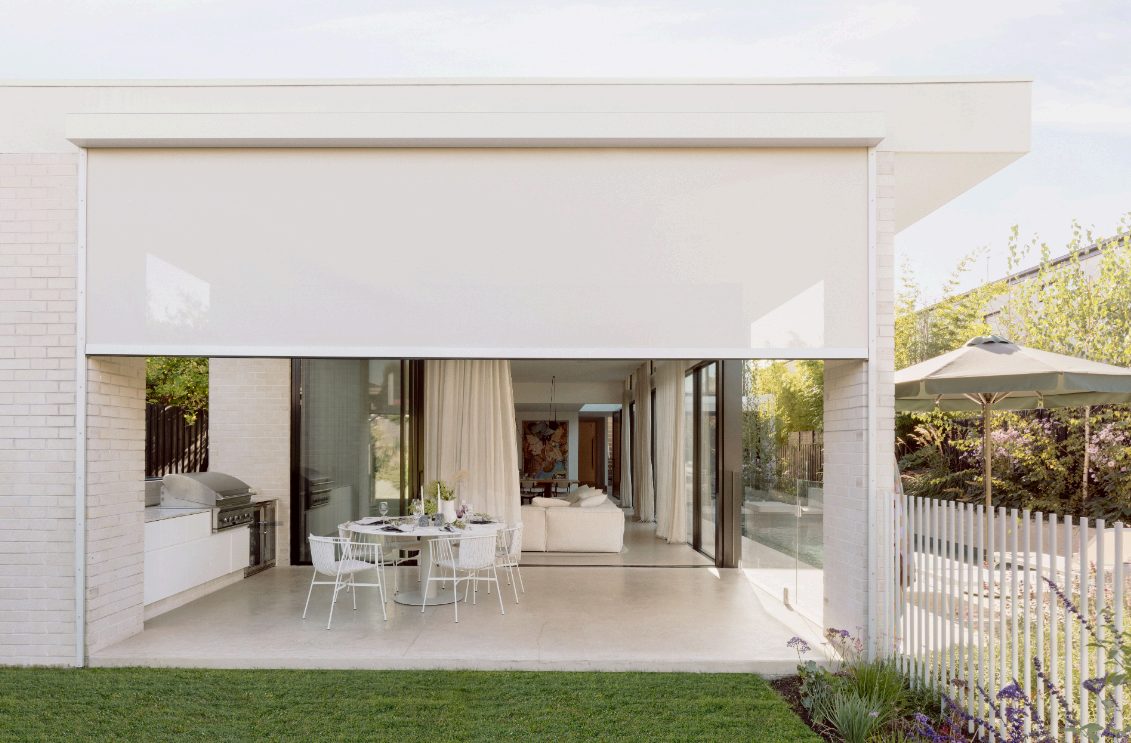
The single biggest factor in an outdoor blind's wind performance is whether the fabric edges are guided in a track or left open. A Zipscreen's zipped edge locks into a side channel along the full drop, which stops the fabric lifting or flapping the way an unguided blind can in a gust.
It's a genuinely different category of performance to a basic straight-drop blind — the track is doing real structural work, not just cosmetic tidying.
PVC vs mesh in wet weather
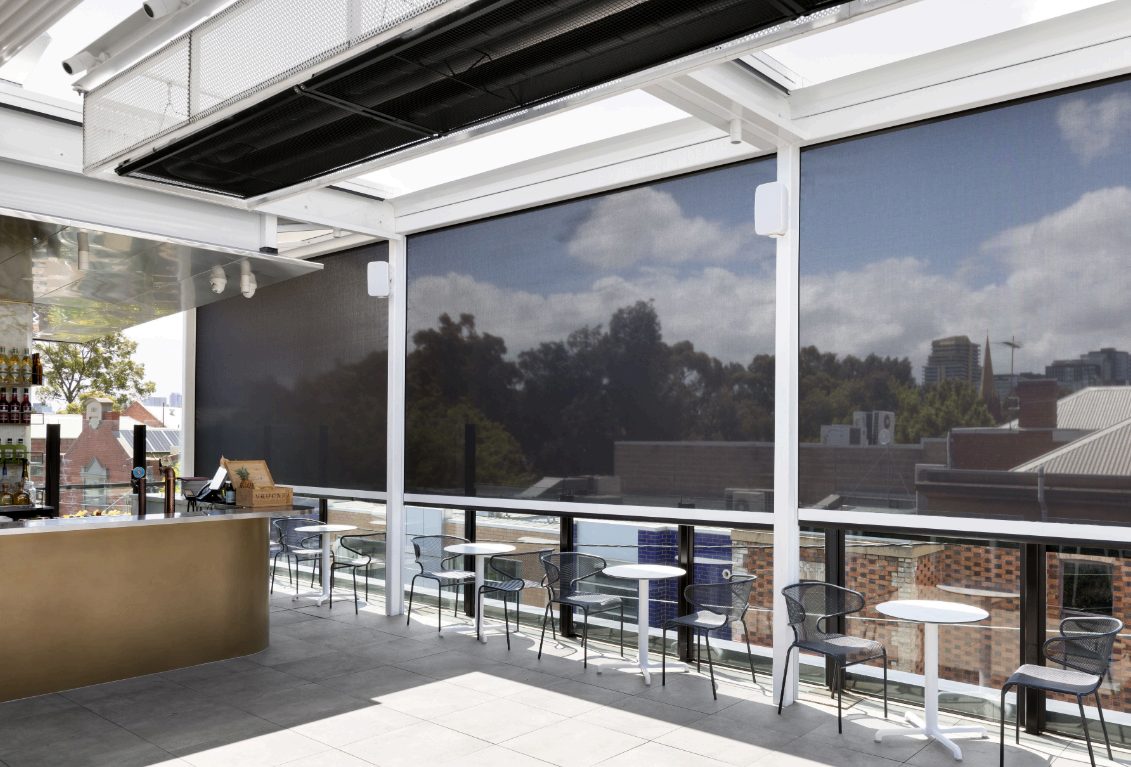
Clear or tinted PVC fabric is the better choice when rain protection matters — it sheds light rain rather than letting it through, while still allowing light in. Sunscreen mesh is built for shade, glare and airflow, and will let rain through, so it's the wrong fabric if keeping a space dry is the priority.
Choosing fabric for your specific exposure
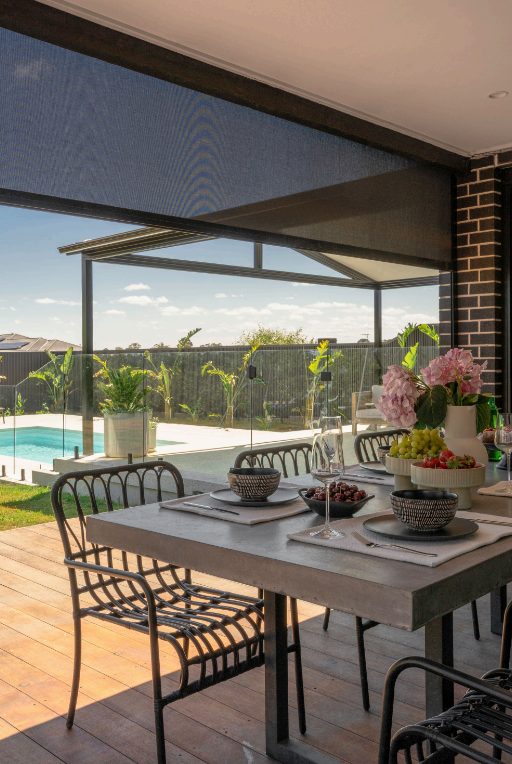
The right fabric depends on which direction a space faces and what it actually needs to cope with. A side that copes mostly with glare and afternoon sun is usually well served by sunscreen mesh. A side that regularly catches wind-driven rain is better suited to PVC. Many enclosed spaces use a mix — PVC on the weather-exposed side, mesh elsewhere — rather than the same fabric all the way around.
What outdoor blinds can't do
An honest point: no fabric outdoor blind — Zipscreen or otherwise — is designed to withstand storm-force wind or heavy, driving rain. In genuinely severe weather, the sensible approach with any outdoor blind is to retract it, the same way you would an awning. What a well-designed track-guided system does deliver is real, meaningful protection through Melbourne's ordinary windy days and passing showers, which is the vast majority of the time an outdoor space actually gets used.
Awnings and wind — when to retract
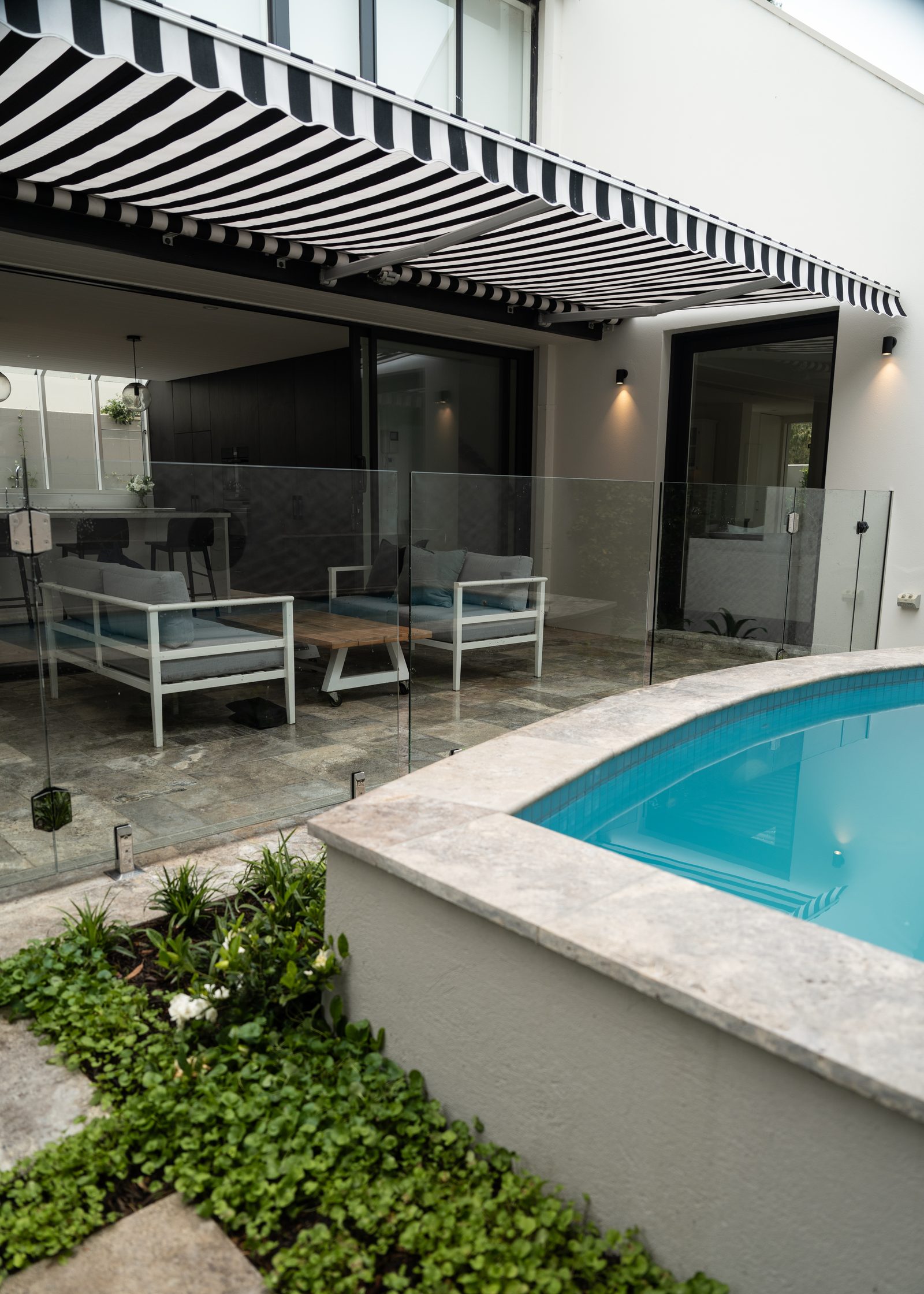
Folding arm awnings are more wind-sensitive than a tracked blind, because the outer edge isn't supported by anything. A wind sensor on a motorised awning handles this automatically; on a manual awning, it's worth getting into the habit of retracting it if a windy change is forecast.
Caring for outdoor blind fabric through winter
Zip-track fabric holds up well through a Melbourne winter, but a few habits help it last: wiping down PVC panels occasionally to stop grime building up in the track, checking the track channel is clear of leaves or debris so the blind runs smoothly, and giving the whole system an occasional full-drop test even if it's mostly left up during the coldest months.
What to do when a storm is forecast
Melbourne's worst wind usually arrives with a front rather than out of nowhere, which gives you time to prepare. The sensible routine is simple: lower track-guided blinds fully so the fabric is held in the channel top to bottom, and retract any folding arm awning completely so there's no unsupported fabric span exposed to gusts. A half-dropped blind is more vulnerable than either a fully closed or fully open one, because the loose section can flex and pull.
If the blinds are motorised with a wind sensor fitted, this happens by itself. The sensor reads wind speed at the installation and retracts an awning or adjusts a blind before conditions reach a level that could cause damage — useful when nobody is home, which is when most storm damage happens.
Rain, pooling and drainage
Water running off a blind or awning has to go somewhere. On a fully enclosed alfresco, that's usually straight down the outside face of the fabric to the ground, which is fine on paving but worth thinking about if the runoff lands on a garden bed or a walkway. On awnings, a slight pitch is set during installation so water sheds forward rather than pooling in the middle of the fabric — pooling is the single most common cause of awning damage in heavy rain, and correct pitch is what prevents it.
Signs a blind isn't coping with the weather
An outdoor blind that's struggling usually tells you before anything breaks. Fabric that flaps or bellies out in moderate wind, a blind that won't sit square in its track, water sitting in a fold rather than running off, or a motor straining on the way up are all worth acting on early. Most of these come down to a track needing cleaning or a tension adjustment rather than a replacement, and catching them early is far cheaper than dealing with torn fabric after a storm.
Frequently asked questions
What is the best outdoor blind for wind?
A track-guided outdoor blind like Zipscreen performs best in wind because the fabric edges lock into a fixed side channel instead of hanging free, which stops flapping and lifting in gusts. No fabric blind is designed for storm-force conditions, so retracting any outdoor blind in genuinely severe weather is the sensible approach.
What is the best outdoor blind for rain?
A PVC-fabric Zipscreen blind is the better option for rain, since PVC sheds light rain while sunscreen mesh lets it through. For heavy, driving rain, no fabric outdoor blind is a substitute for a solid roof.
Are outdoor blinds waterproof?
PVC outdoor blind fabric is water-resistant and designed to shed light rain, but it isn't a substitute for a solid roof in heavy or driving rain. Sunscreen mesh fabric is not designed to keep rain out at all.
Related reading
Want a system built for Melbourne's weather? [Book a Free Measure & Quote](/contact) with Tiptop Blinds — in-home, across Melbourne.