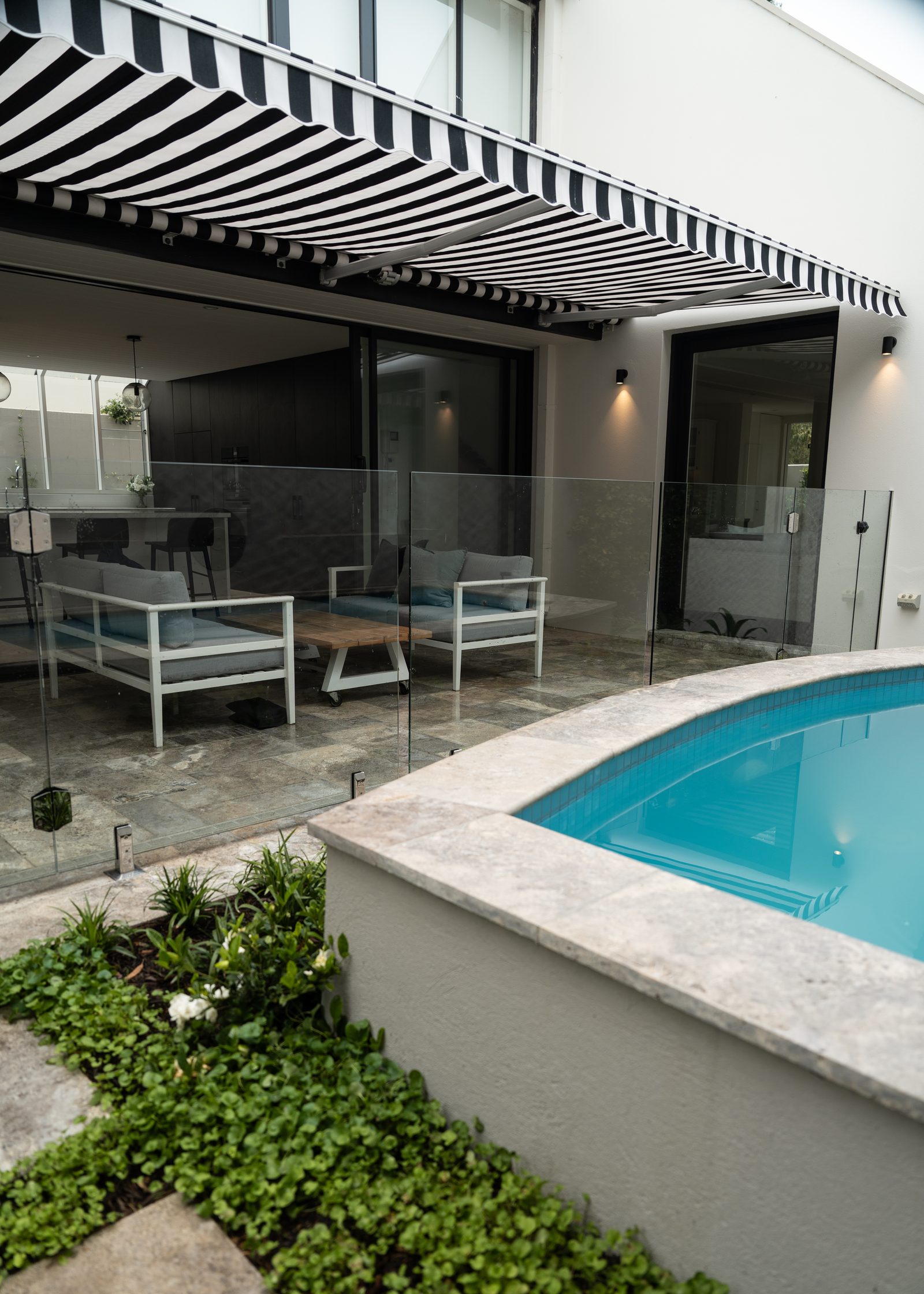
An awning with worn, faded or torn fabric can look like it needs replacing entirely — and sometimes it does. Often, though, the frame and arms are still perfectly sound, and it's only the fabric that's had enough.
What "recovering" an awning means
Recovering — sometimes called reclothing — means fitting new fabric to an awning's existing frame, rather than replacing the whole unit. If the mechanism (the arms, the roller, the motor if there is one) is still working properly, recovering can bring an awning back to looking and performing like new for a fraction of the cost of full replacement.
Signs an awning needs new fabric
When repair makes sense, and when it doesn't
Recovering is generally the more cost-effective option when the frame, arms and any motor are in good working order and it's genuinely just the fabric that's failed. If the frame itself is bent, rusted, or the mechanism is unreliable, replacement is usually the better long-term choice — there's limited value in putting new fabric on a frame that's on its way out.
A straightforward inspection is the fastest way to know which category an awning falls into.
What the process involves
Getting an awning assessed and, where recovering makes sense, refitted with new fabric, generally follows a few clear steps: an on-site assessment of the frame and fabric, choosing a new fabric (colour, material, and any UV or weather-resistance needs), and having the old fabric removed and the new fabric properly fitted and tensioned by the same team that installs Tiptop's new awnings.
Repairing awnings Tiptop didn't originally install
Recovering and repair work isn't limited to awnings Tiptop originally fitted — an assessment can generally be done on any folding arm awning, regardless of who installed it, to establish whether the frame and mechanism are sound enough to justify new fabric. The main variable is whether replacement parts are available for an older or less common frame, which is exactly what an on-site assessment is for.
Choosing a new fabric when recovering
Recovering is also a chance to update the look of an awning, not just restore it — colour, pattern and even fabric type (say, moving from a standard acrylic to a heavier-duty weather fabric) can all be reconsidered at this point rather than automatically matching what was there before. It's worth thinking about whether the original fabric choice actually suited the space's exposure, or whether a different option would hold up better this time around.
Extending the life of a new awning
For anyone installing a new awning now, a bit of routine care goes a long way toward delaying the day it needs recovering: retracting it in strong wind, giving the fabric an occasional wash, and not leaving it extended and unused for long stretches where dirt and moisture can sit on the fabric. None of this is complicated, but it's the difference between an awning that needs attention after several years versus one that needs it much sooner.
What to check before you book an assessment
A quick look before you call helps set expectations. Extend the awning fully and watch how it moves: arms that judder, a motor that strains, or fabric that no longer sits flat and square are all worth noting. Then check the fabric itself for fading, stiffness, small tears, or mould that cleaning hasn't shifted, and the frame for rust, bending or loose wall fixings.
None of this replaces an on-site assessment, but it's a useful indicator. Fabric problems on a frame that still runs smoothly usually point toward recovering. Problems with the frame, arms or motor usually point toward replacement — and either way, knowing what you're seeing makes the conversation on the day a lot quicker.
How long a recovered awning should last
On a well-made awning, the fabric is usually the first part to show its age rather than the hardware — which is precisely why recovering exists as an option. A recovered awning, cared for sensibly, should give years of service in the same way a new one would, because the parts doing the mechanical work are unchanged and the part that was failing has been replaced.
The same logic applies the next time round. Once a frame has been recovered successfully, the tracks, arms and mechanism are still in place, so any future fabric change is a simpler job than a full new installation.
Getting an awning assessed
Assessments are done the same way as any other Tiptop job: in person, against the actual awning, at the property. That's the only reliable way to judge the condition of a frame, check whether parts are available, and give an honest recommendation on recovering versus replacing rather than a guess based on a photo.
Frequently asked questions
Can old awnings be recovered?
Yes — if the frame, arms and motor (where fitted) are still in good working order, an awning can generally be recovered with new fabric rather than replaced entirely, which is usually the more cost-effective option. If the frame or mechanism itself has failed, replacement tends to make more sense.
How do I know if my awning needs new fabric or a full replacement?
Fading, cracking, mould or sagging fabric on an otherwise sound frame usually points to recovering rather than replacing. A bent or rusted frame, or an unreliable motor or mechanism, usually points the other way. An on-site assessment is the most reliable way to tell which applies.
Related reading
Got an awning that's seen better days? [Book a Free Measure & Quote](/contact) with Tiptop Blinds and we'll assess whether it needs recovering or replacing.