
Why Window Furnishings Matter More Than You Think
Why Melbourne Homes Feel So Cold in Winter
Modern Melbourne homes are designed to maximise natural light, openness, and connection to the outdoors. Large floor-to-ceiling windows, oversized sliding doors, stacker doors, void windows, and wall-to-wall glazing have become defining features of contemporary architecture and interior design.
And for good reason — they are beautiful.

In winter, we are fortunate to experience many crisp blue-sky days where natural sunlight streams into the home. North- and east-facing windows in particular can help naturally warm living spaces during the day, making rooms feel bright, comfortable, and inviting.
But as soon as the sun moves away from the glass — or disappears entirely — the temperature inside many homes changes dramatically.
North-facing windows that felt warm during the afternoon can become cold the moment the sun sets. East-facing windows lose warmth after the morning sun passes. South-facing windows often receive little to no direct winter sunlight at all, meaning they remain cold throughout the day. West-facing windows receive only a short burst of winter sun due to shorter days and earlier sunsets.
In a typical Melbourne home, many windows remain cold for most of winter.
Without the right window furnishings, warmth generated inside the home escapes through the glass, while cold air and draughts around windows can make rooms feel uncomfortable — particularly during the evening and overnight.
This is one of the biggest reasons Melbourne homes can feel cold in winter, even when heating is on.

Why Windows Lose So Much Heat in Winter
Glass is one of the weakest thermal surfaces in a home.
Unlike insulated walls, windows allow warmth to escape much more easily. Even when windows are fully closed, cold air near the glass can cool down the surrounding space, creating that familiar feeling of a cold bedroom, chilly living room, or cold air sitting near large windows and sliding doors.

This becomes even more noticeable in homes with:
At night, when outdoor temperatures drop and heating systems are working harder, untreated windows can become one of the biggest sources of heat loss in the home.

The good news is that there are ways to help keep your Melbourne home warmer in winter — without simply turning up the heating.
The Best Way to Keep a House Warm in Winter: Create a Barrier Between the Home and the Window

At TipTop Blinds, we believe one of the most effective ways to improve winter comfort is by creating an insulating barrier between the room and the cold glass.
And in many homes, blockout curtains are one of the best solutions.
Unlike harder products, curtains are soft and flexible. This means they wrap the window more effectively and reduce air movement around the edges.
Because curtains are designed to extend beyond the window frame, they create a larger protective barrier between the cold glass and the room.
In most Melbourne homes, blockout curtains are installed ceiling-to-floor and often extend well past the sides of the window. This is partly aesthetic — helping curtains stack back neatly and clear the glass during the day — but it also improves thermal performance.
Simply put, more coverage means a better barrier.


Why Blockout Curtains Work So Well in Winter

Blockout curtains are made from substantial fabric designed to reduce light, improve privacy, and help insulate the home.
Unlike sunscreen blinds or sheer curtains, which are designed to allow filtered light and airflow, blockout curtains create a denser barrier against cold glass, draughts, and warmth escaping the room.
They also use significantly more fabric than most people realise.
Curtains are made with fullness, meaning far more fabric is used than the width of the track itself. For example, a 4-metre-wide curtain track may require 8–10 metres of fabric to create a full, luxurious curtain.
Now imagine that across a typical Melbourne living room window that is 4 metres wide and 2.7 metres high.
You may have close to 30 square metres of blockout fabric creating a soft barrier between the home and the window.

This helps:
The Different Ways Blockout Curtains Are Made
1. Coated Blockout Fabric Curtains
One of the most straightforward solutions is a single blockout curtain installed on one track.
These curtains are made using what is known as a coated blockout fabric — a fabric with a decorative face and blockout properties built into the material itself.
Today's fabrics come in beautiful textures, soft neutrals, earthy tones, warm greys, charcoals, greens, and contemporary finishes that work beautifully in modern Melbourne homes.
This allows homeowners to achieve warmth, privacy, and insulation in one curtain.
2. Decorative Fabric with a Blockout Lining
Another popular option is taking a decorative drapery fabric and attaching it to a separate blockout lining.
This allows almost any curtain fabric to become a blockout curtain.
In this setup, the homeowner chooses a beautiful front fabric, while a separate blockout lining sits behind it, creating a single curtain installed on one track.
This option is often chosen when homeowners want a softer or more luxurious fabric while still improving winter warmth and room darkening.


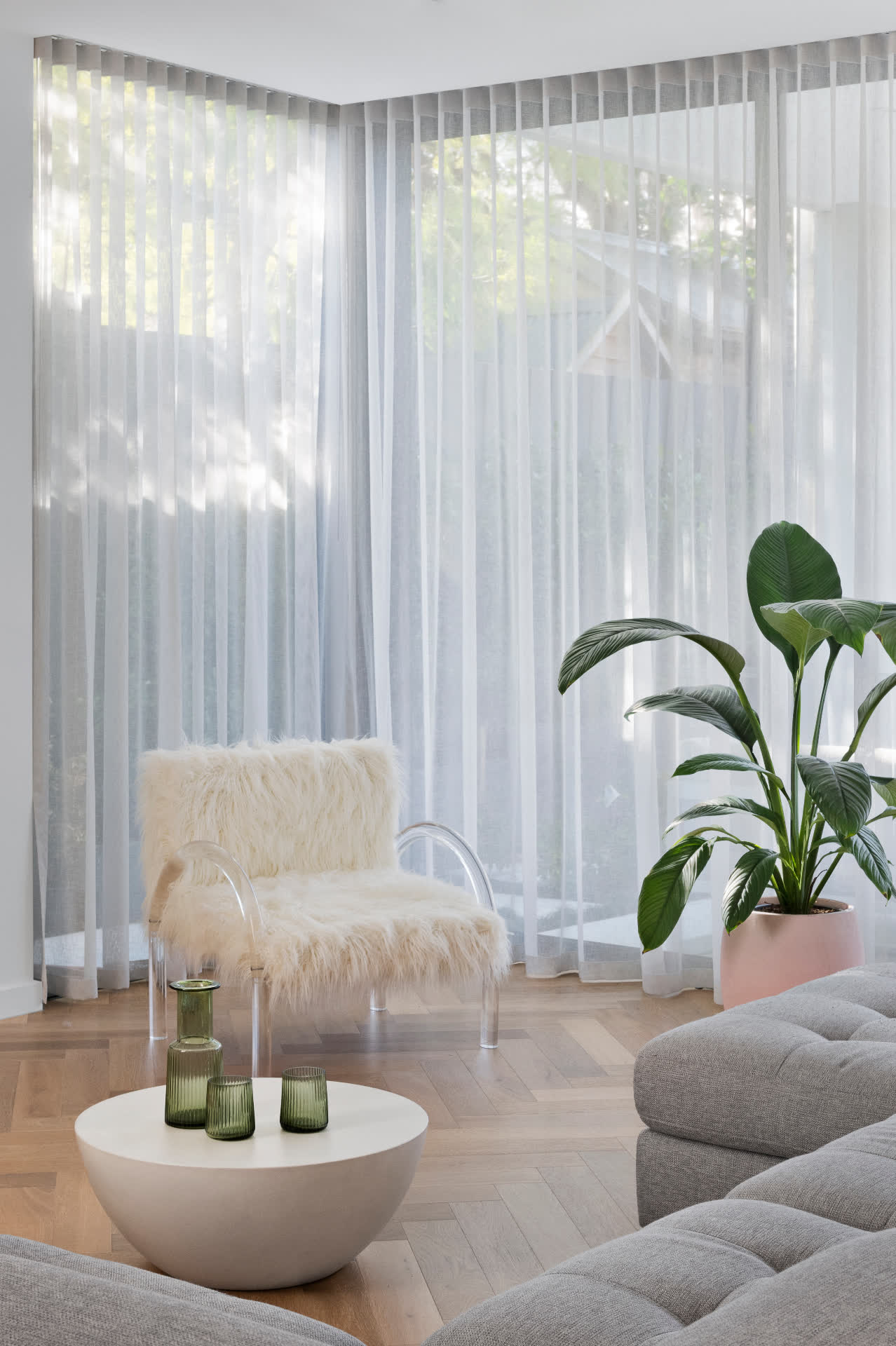
3. Double Curtains: Sheer in Front, Blockout Behind

A very popular solution in Melbourne homes is double curtains.
This usually involves a sheer curtain on the front track and a blockout curtain or blockout lining sitting behind it, closer to the glass.
During the day, the sheer softens light and provides daytime privacy, while the blockout layer improves insulation and nighttime warmth.
Because the blockout layer is mostly hidden behind the sheer, many homeowners choose a simpler lining fabric rather than a decorative blockout fabric.
4. Double Curtains: Blockout in Front, Sheer Behind


Another increasingly popular look is reversing the order.
Here, the sheer curtain sits closer to the glass while the blockout curtain becomes the visible front layer inside the room.
This front curtain may be made from a coated blockout fabric or a decorative drapery fabric attached to a blockout lining.
This approach creates a richer, more luxurious look while still helping keep the home warmer in winter.
Do Curtains Need to Touch the Floor?


Curtains touching the floor can help create a slightly stronger barrier against air movement.
However, the difference is usually not dramatic.
At TipTop Blinds, many customers choose curtains finished around 1 cm off the floor for practicality, easier cleaning, and avoiding unnecessary wear on the fabric.
Even slightly off the floor, blockout curtains still create a very significant barrier between the room and the cold glass.
Generally speaking, the more complete the barrier, the better the thermal performance.
Why Sheer Curtains and Sunscreen Roller Blinds Are Not Enough on Their Own

Sheer curtains and sunscreen roller blinds are beautiful products — but they are not designed primarily for insulation.
Both are made from breathable fabrics intended to allow filtered light, visibility, and airflow.
This makes them excellent for daytime privacy and softening harsh sunlight, but they generally do not create a strong enough barrier to significantly reduce winter heat loss on their own.
Many Melbourne homeowners therefore pair sheer curtains or sunscreen blinds with a blockout curtain or blockout roller blind to improve warmth during winter.
Are Roman Blinds Good for Winter?

Roman blinds are a great option for winter, particularly when made with a blockout lining. Unlike sunscreen fabrics, Roman blinds are made from soft drapery fabrics that fold neatly when raised and sit close to the window when lowered, helping create a barrier between the room and the cold glass. Their fabric construction and optional blockout lining can help improve warmth, reduce heat loss, and make bedrooms, studies, and living spaces feel noticeably cosier during Melbourne winters.
Are Plantation Shutters Good for Winter?

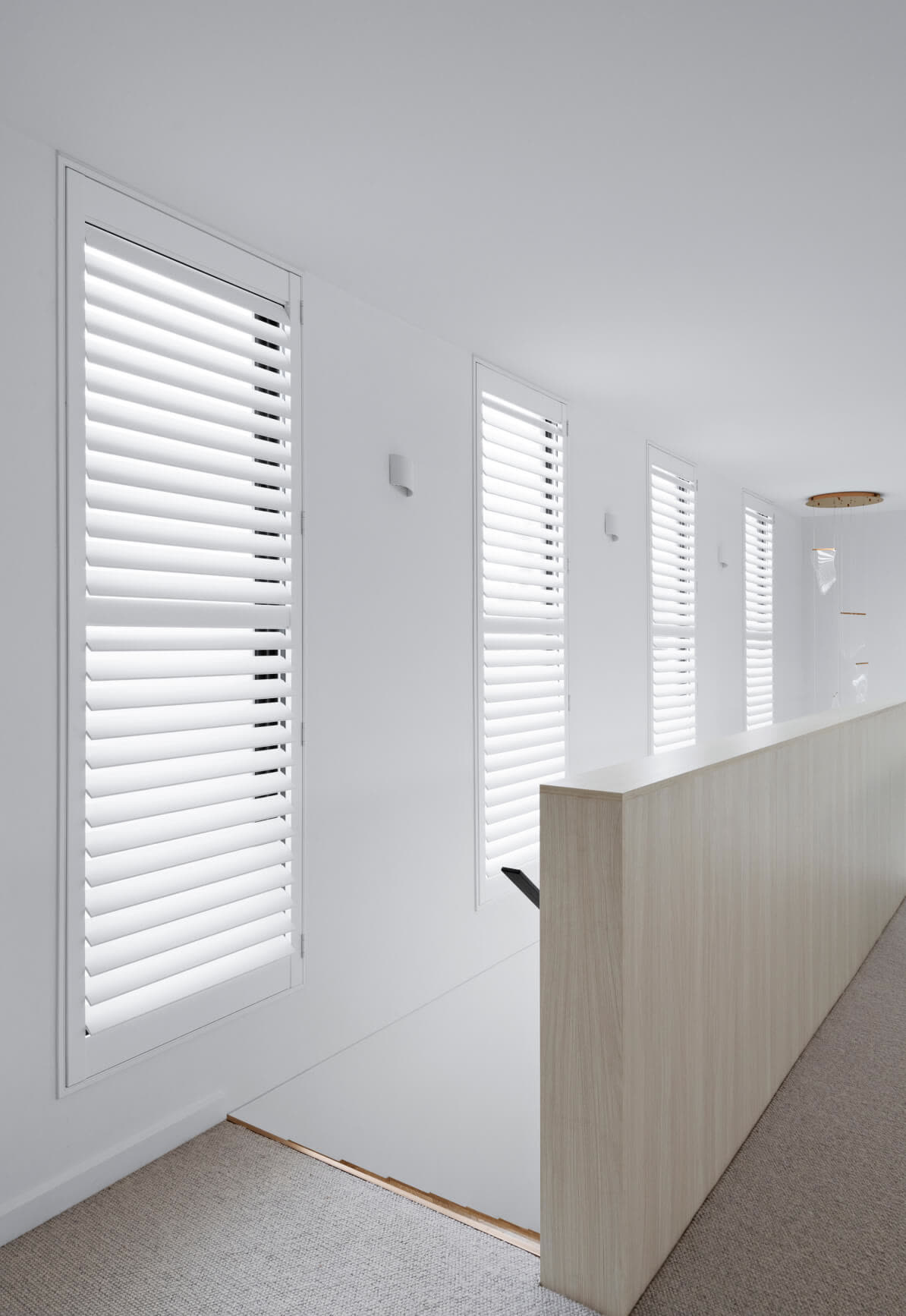
Plantation shutters do create a barrier between the room and the window and can help improve comfort.
However, because shutters have operable blades rather than one continuous layer, small gaps remain where air movement can still occur.
For this reason, they are generally not as insulating as blockout curtains.
That said, plantation shutters are often still the best design solution for bathrooms, period homes, and traditional front facades where aesthetics are important.
In some homes, shutters are also paired with blockout curtains installed in front to improve warmth.

Do Blockout Roller Blinds Keep a House Warm?

Blockout roller blinds are another strong option for winter comfort.
Because they sit close to the window and are often made slightly larger than the glass itself, they help reduce gaps where cold air can move through.
Many blockout roller blind fabrics are made from layered materials that help improve insulation, room darkening, and privacy.
While curtains generally create a stronger insulating barrier because they wrap the window more completely, blockout roller blinds remain an excellent winter solution — particularly when combined with curtains.
Motorising Your Winter Window Furnishings
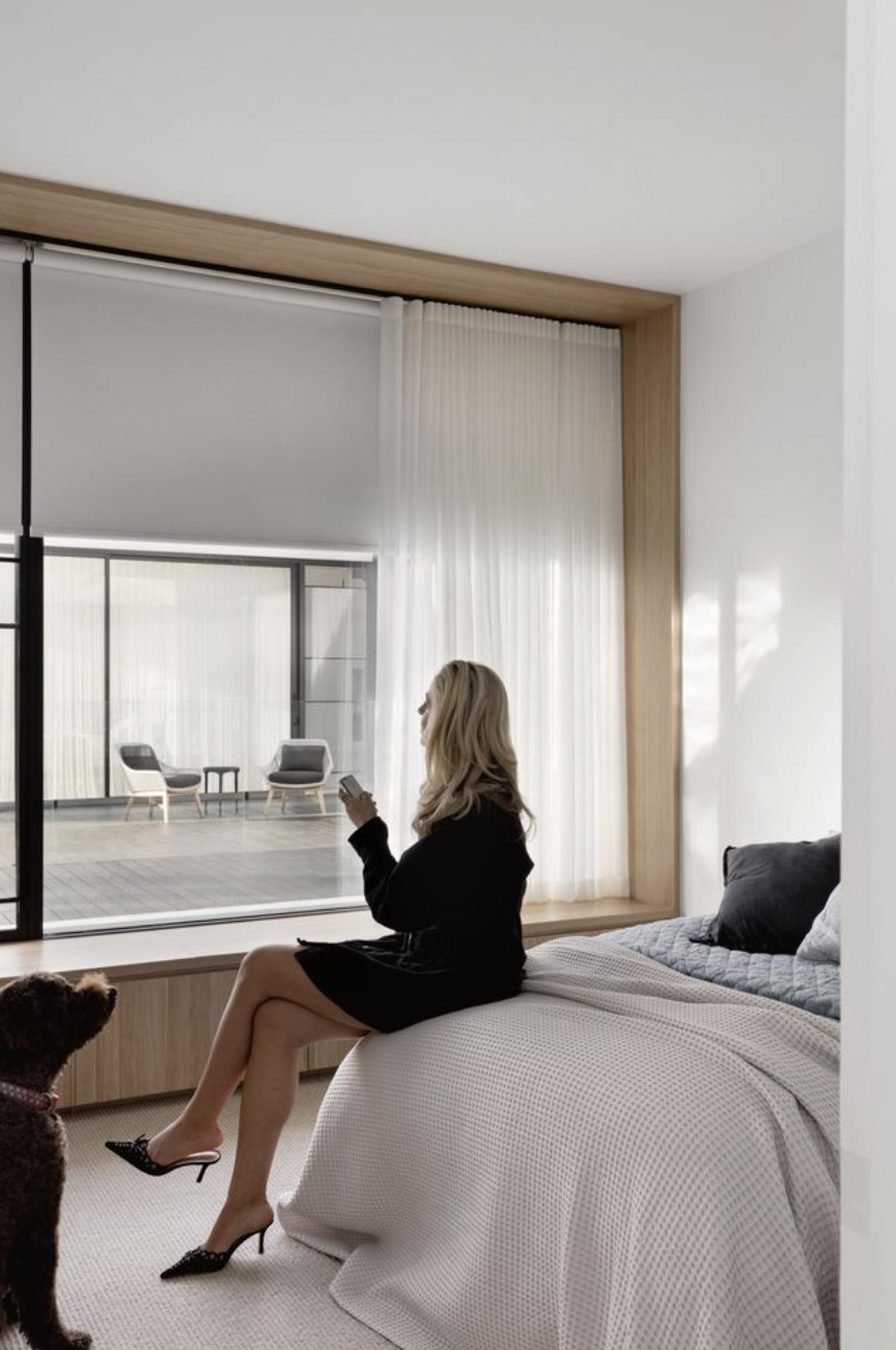
Motorising blockout curtains and blockout roller blinds can make winter comfort even easier.
Connected to a smart hub, window furnishings can be controlled using a phone, smart watch, computer, or home automation system.
In Melbourne, where winter evenings arrive early, curtains and blinds can be programmed to close automatically around dusk each day.
This means bedrooms, living spaces, and unused rooms can begin creating an insulating barrier before temperatures drop — helping reduce cold air, condensation, draughts, and heat loss, while improving comfort and reducing reliance on heating throughout the night.
Explore the Winter Range
Want help choosing the right winter window furnishings? [Book a free in-home consultation with Tiptop Blinds](/contact).