For a bedroom, the two aren't really competing for the same job.
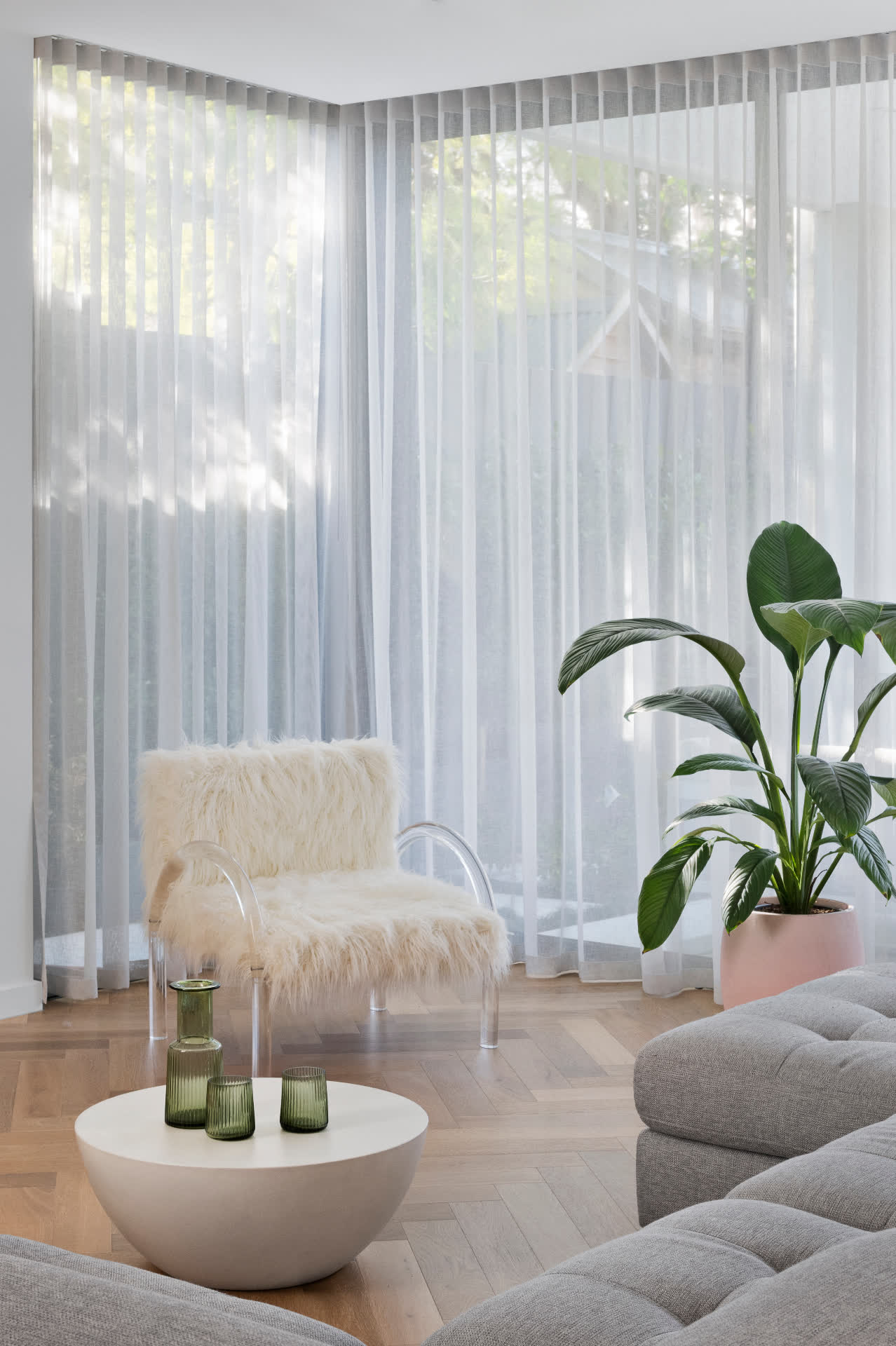
Sheer curtains are soft, breathable, and let filtered daylight in while giving daytime privacy. On their own, they're not insulating and won't block light at night — so a bedroom dressed only in sheers will still be bright in the morning and won't hold much warmth in winter.
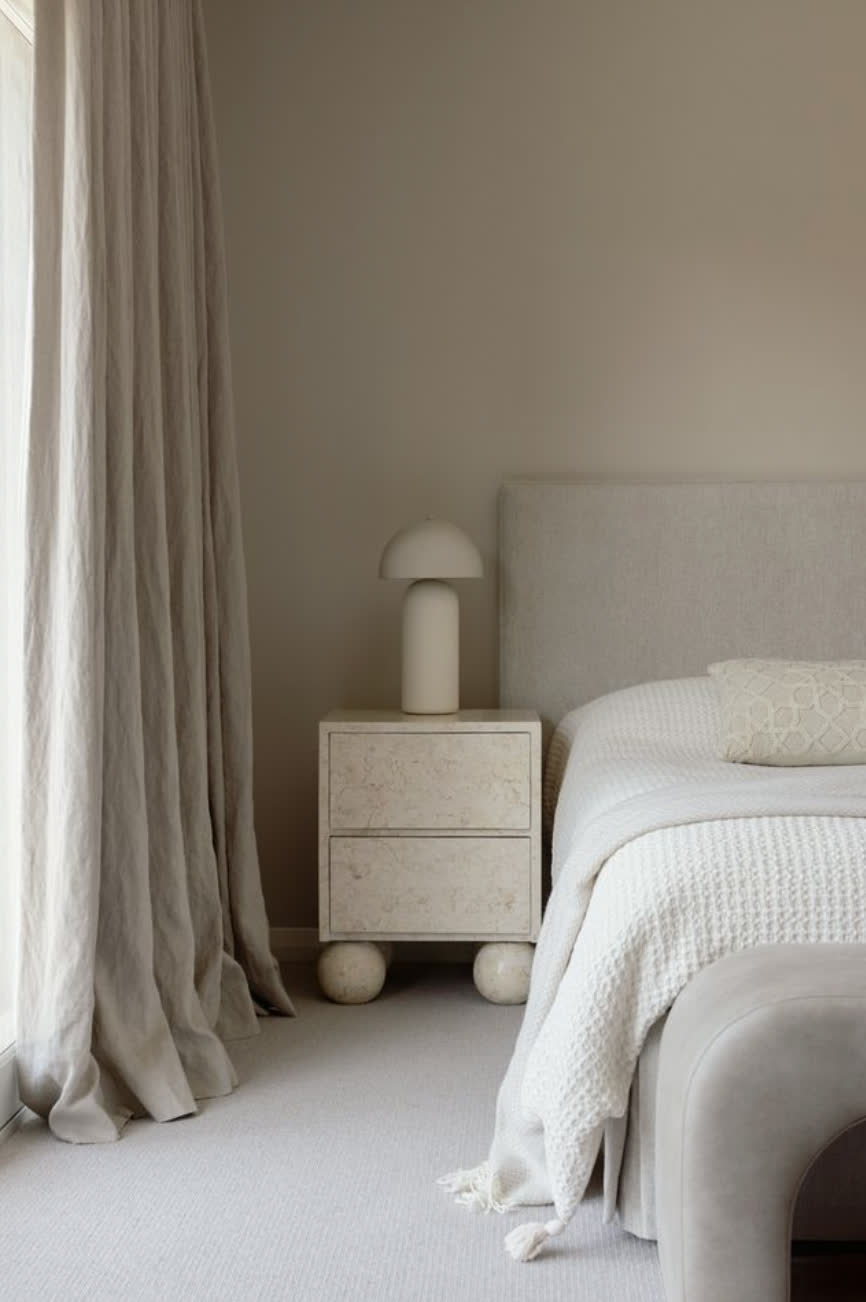
Blockout curtains do the opposite job well. They reduce light strongly, add privacy at night, and help insulate the room — particularly when hung ceiling-to-floor and extending past the window frame.
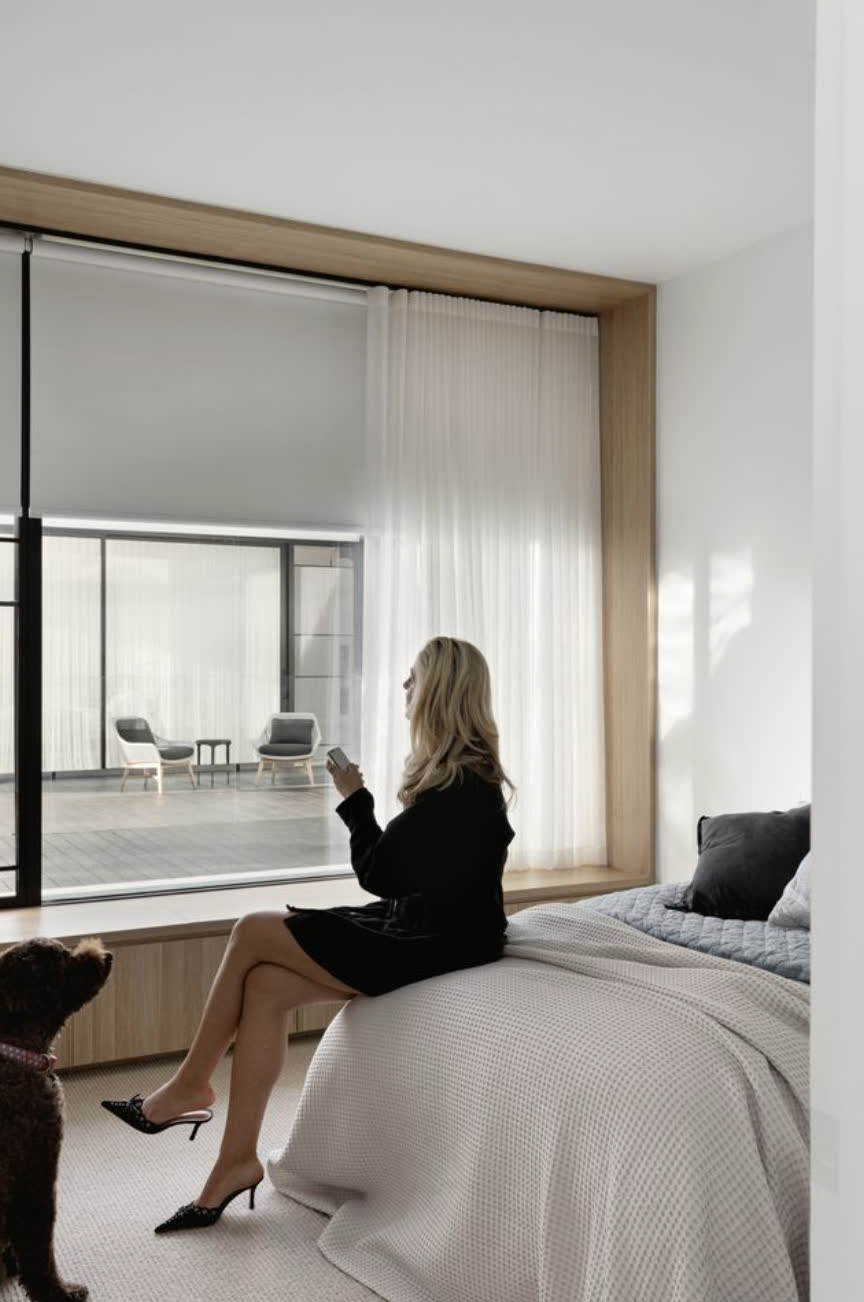
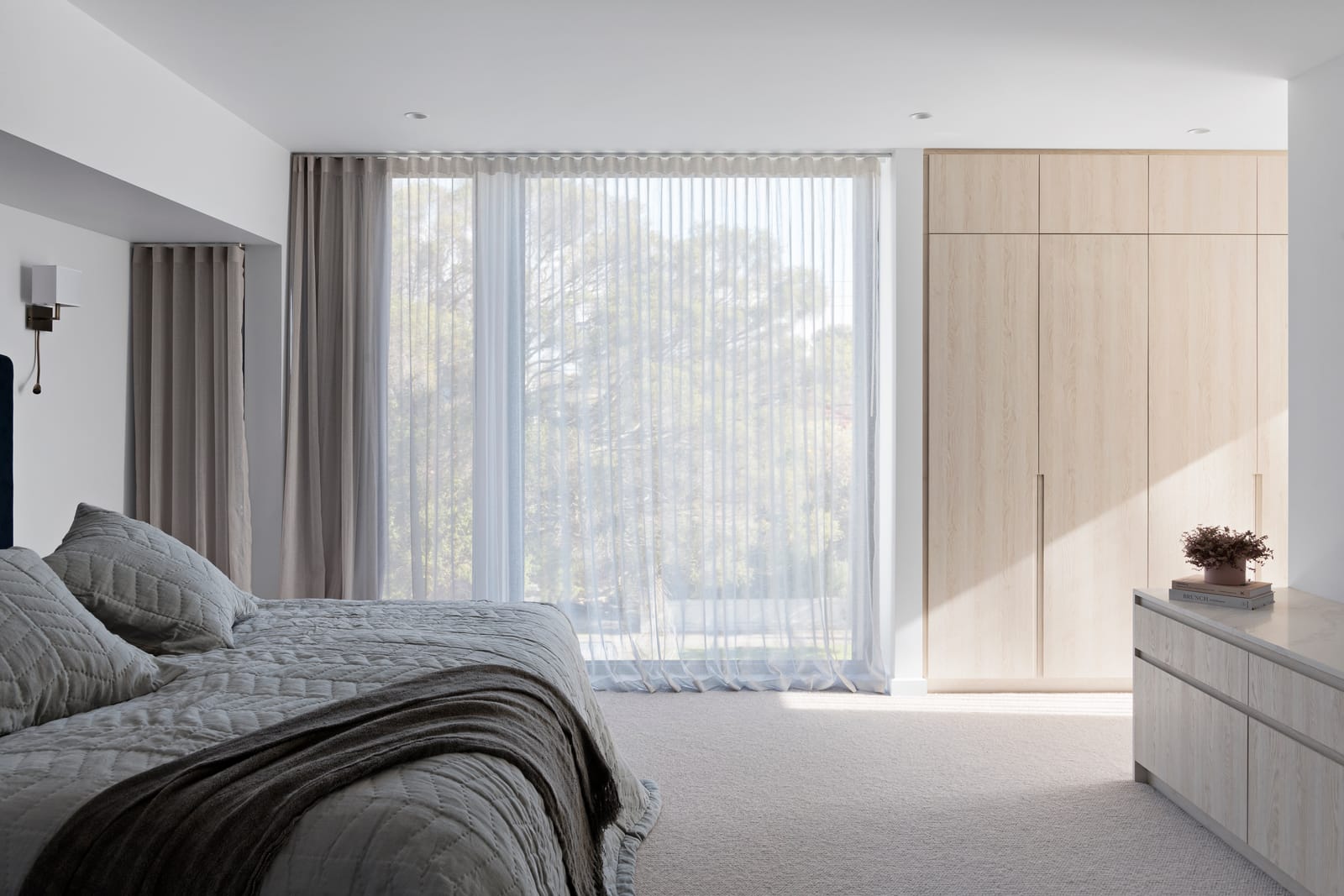
Most Melbourne bedrooms are best served by using both — sheers on the inner track for daytime softness and privacy, blockout behind on the outer track for night-time darkness and warmth. This is what Tiptop calls a double curtain setup, and it's the strongest option for a bedroom that needs to work well both day and night.
FAQs
Should I choose sheer or blockout curtains for a bedroom?
For a bedroom, blockout curtains do more of the heavy lifting — reducing light, adding privacy and helping insulate the room. Sheers alone won't block light or add warmth, so they work best paired with a blockout layer rather than used on their own.
Can I use sheer and blockout curtains together?
Yes — this is a common setup called double curtains, with sheers on one track for daytime softness and blockout on the other for night-time darkness and insulation.
Do sheer curtains help with privacy?
Sheer curtains give daytime privacy by softening the view in while still letting light through. They don't provide night-time privacy on their own once lights are on inside.
Will blockout curtains make a bedroom too dark during the day?
Blockout curtains can be opened during the day like any curtain — they only block light when closed, so daytime brightness isn't affected unless you choose to close them.
Related reading
Planning new bedroom curtains? [Book a Free Measure & Quote](/contact) with Tiptop Blinds — in-home, across Melbourne.