Both are built to block light, but they don't perform the same way.
Blockout roller blinds sit close to the glass, inside or just outside the window frame. They're very effective across the main pane, but because the blind is sized to the window itself, some light can still creep in around the edges.
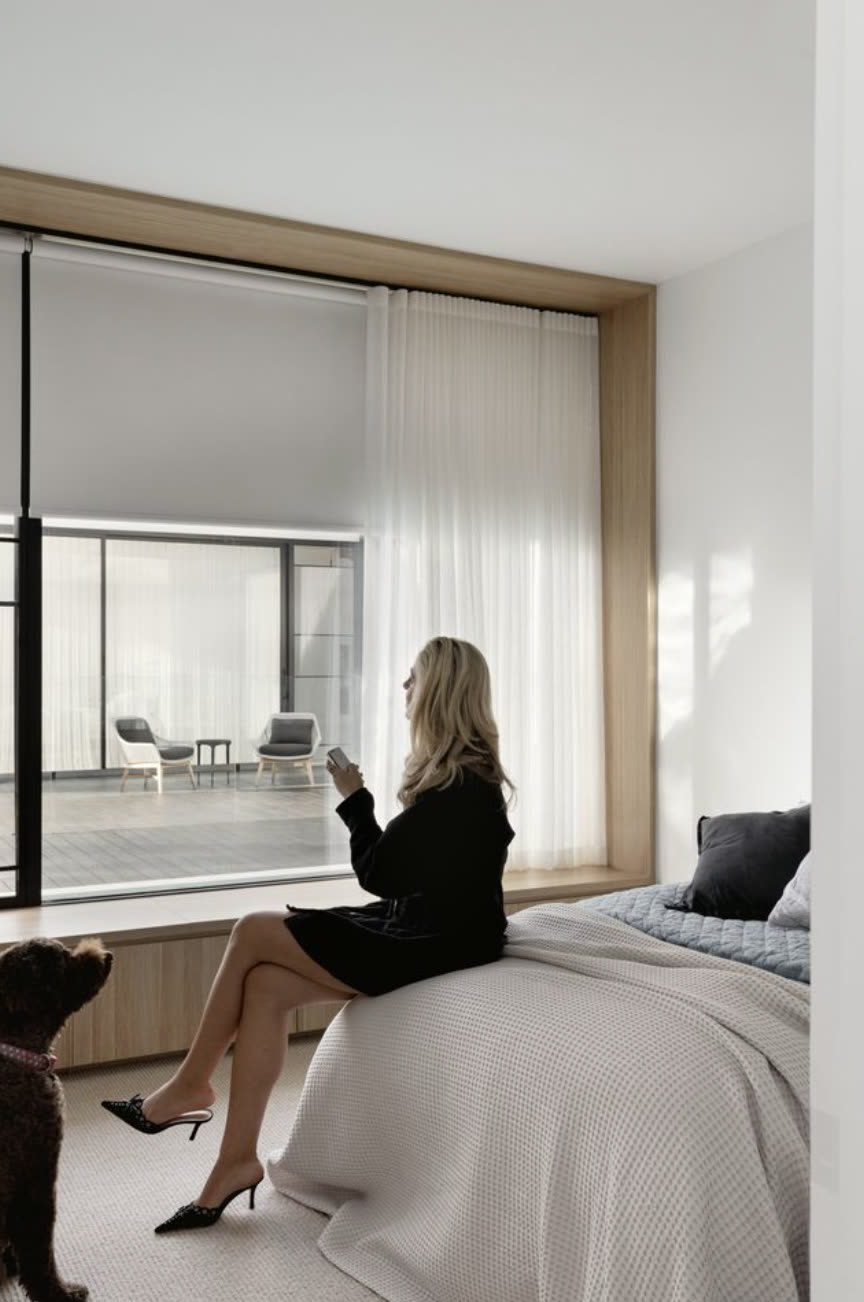
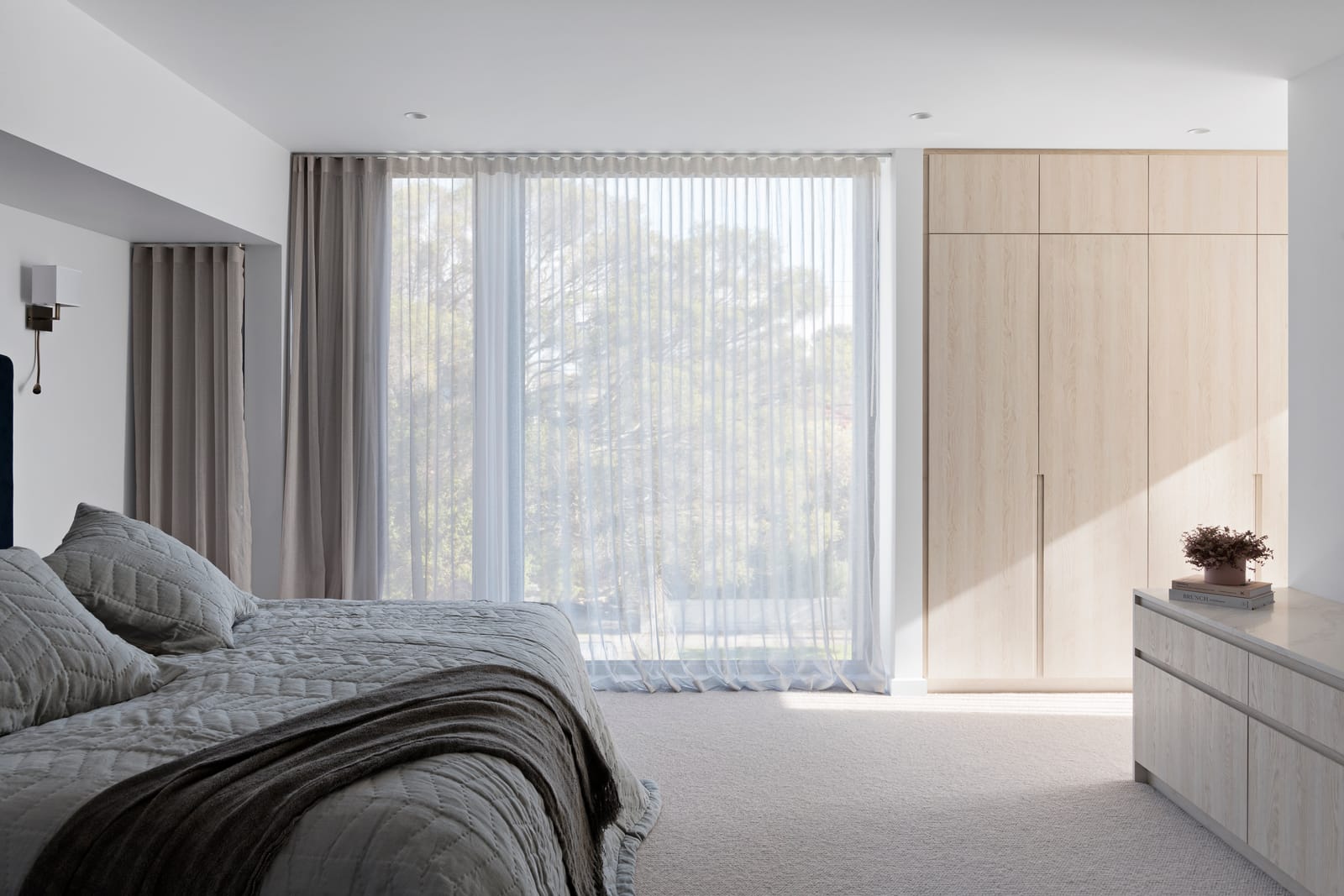
Blockout curtains, especially when hung ceiling-to-floor and extending past the window frame on both sides, cover a much larger area than the glass alone. That extra coverage is what makes a well-fitted blockout curtain the stronger option for a fully dark room.
The two aren't mutually exclusive. Layering a blockout roller blind behind a blockout curtain is a common way to close remaining gaps and get closer to total darkness — useful for shift workers or a nursery.
FAQs
Do roller blinds or blackout curtains block more light?
A well-fitted blockout curtain, hung ceiling-to-floor and extending past the window frame, generally blocks more light overall than a blockout roller blind, because it covers a larger area with fewer edge gaps.
Why does light still come in around my blockout blind?
Blinds are sized to the window opening, so small gaps at the sides are a normal part of how they're built and operated — not a fault.
Can I combine a roller blind and curtains for total darkness?
Yes — layering a blockout roller blind behind blockout curtains is a common way to close the remaining edge gaps and get much closer to full darkness.
Is blockout the same as blackout?
In window furnishings, the two terms generally describe the same type of light-blocking fabric — Tiptop uses "blockout" as the standard term.
Related reading
Want a darker bedroom? [Book a Free Measure & Quote](/contact) with Tiptop Blinds — in-home, across Melbourne.