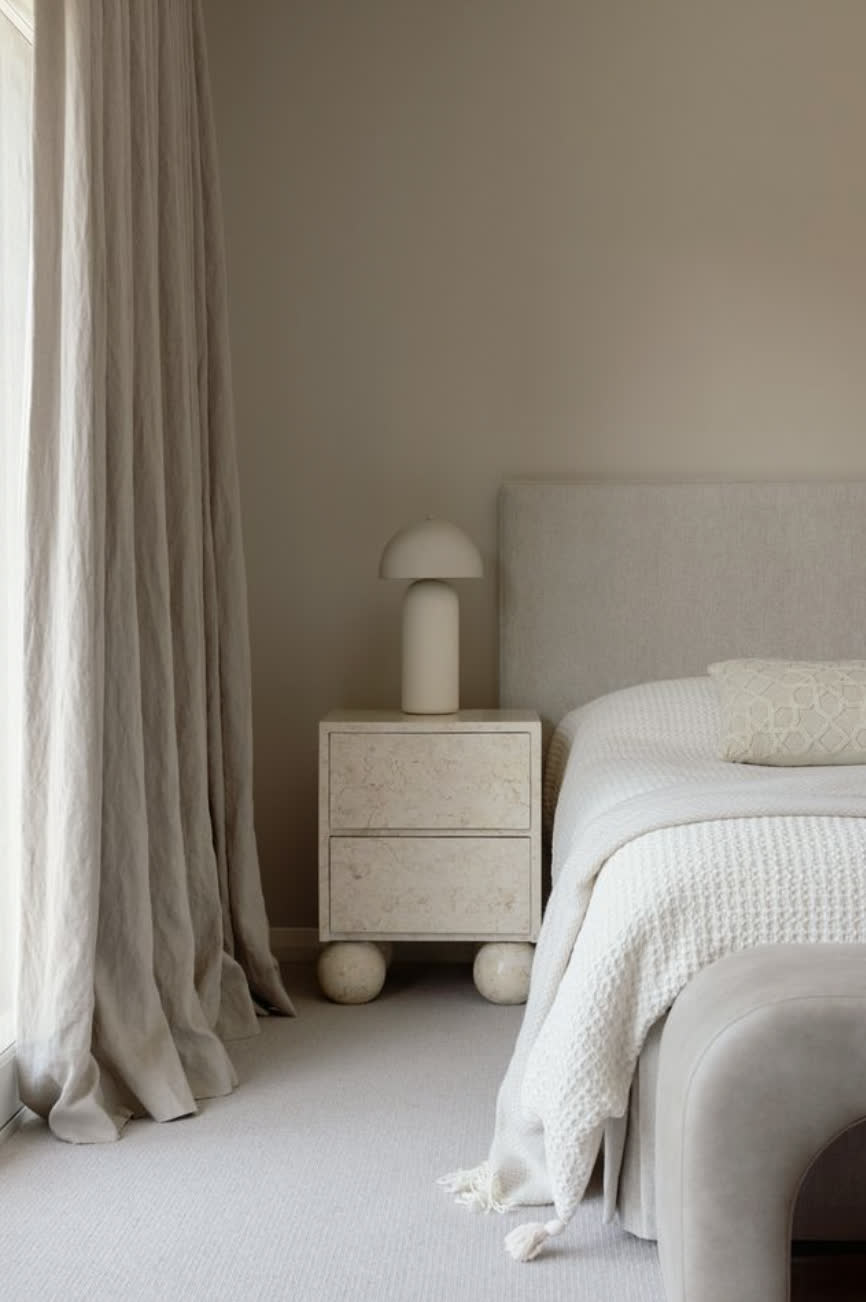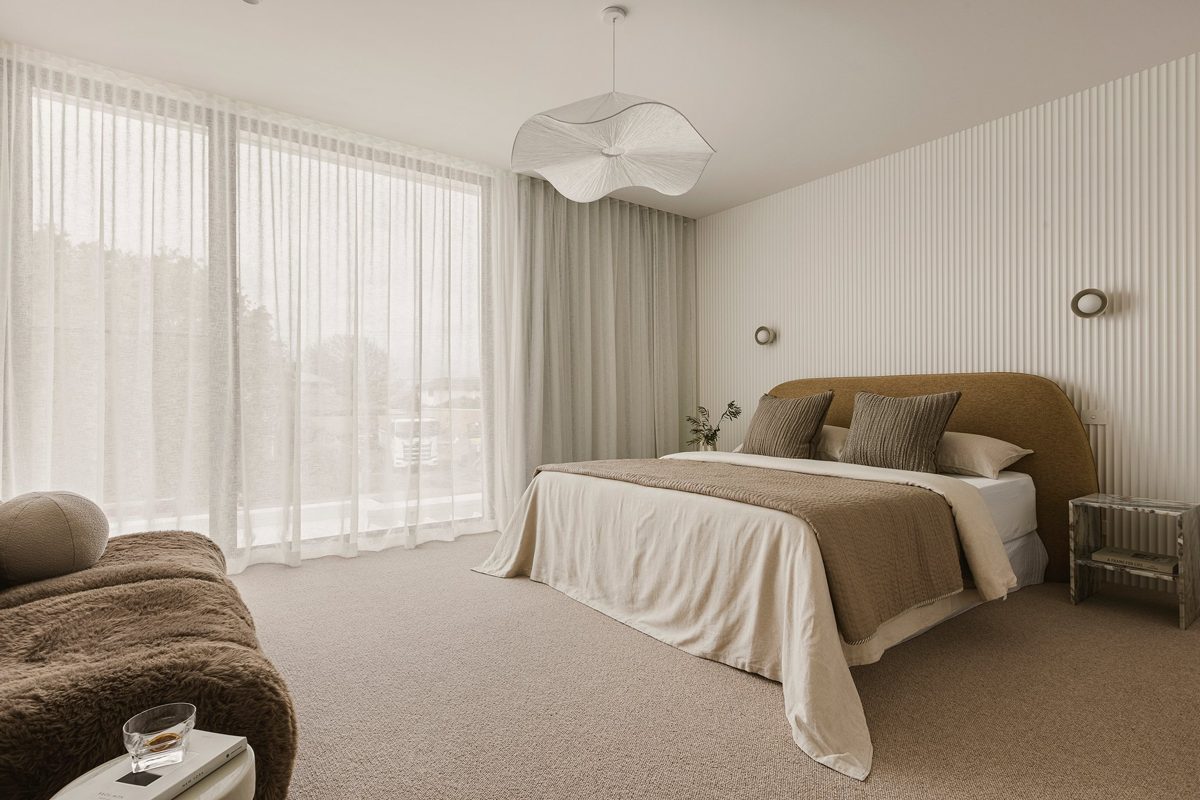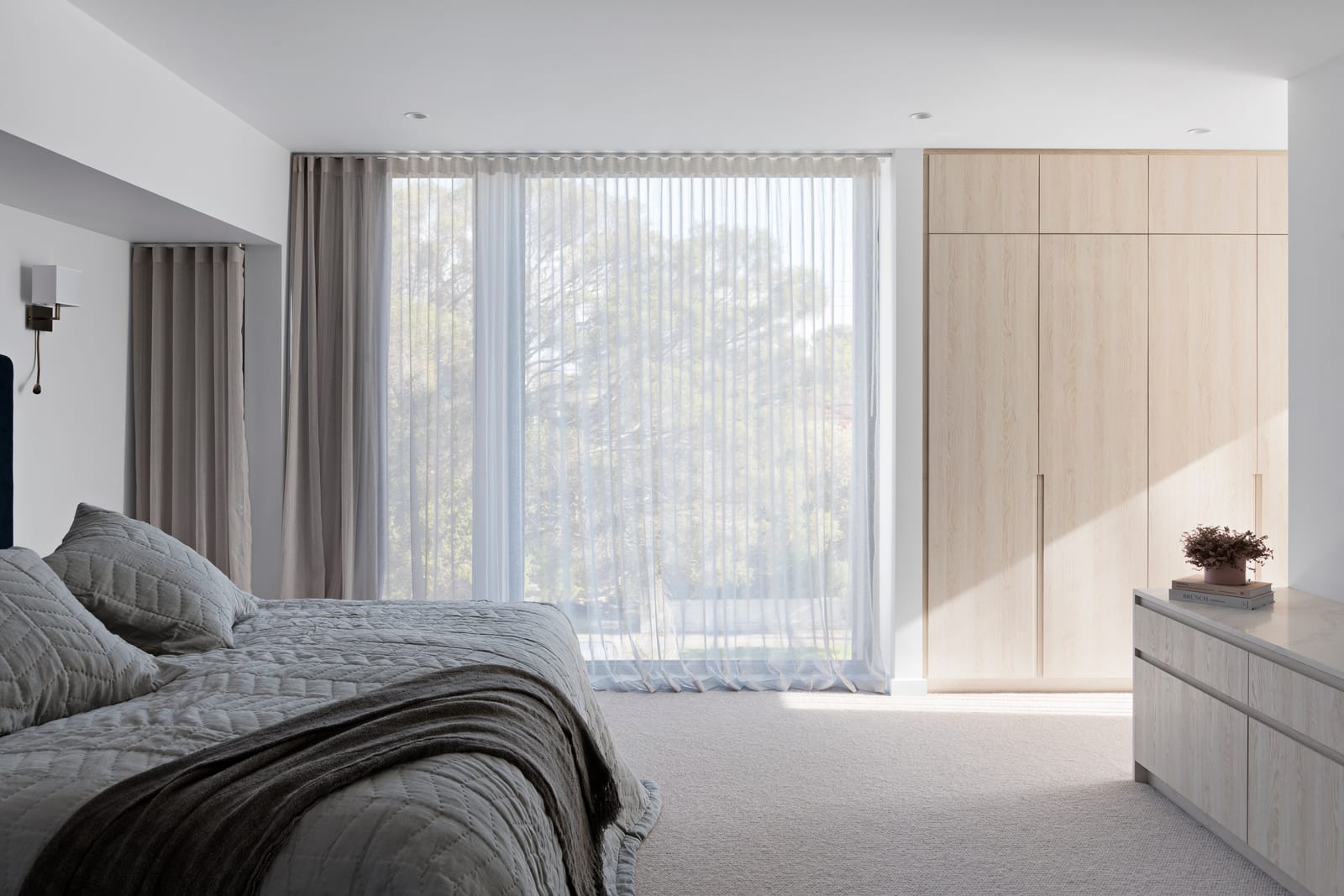
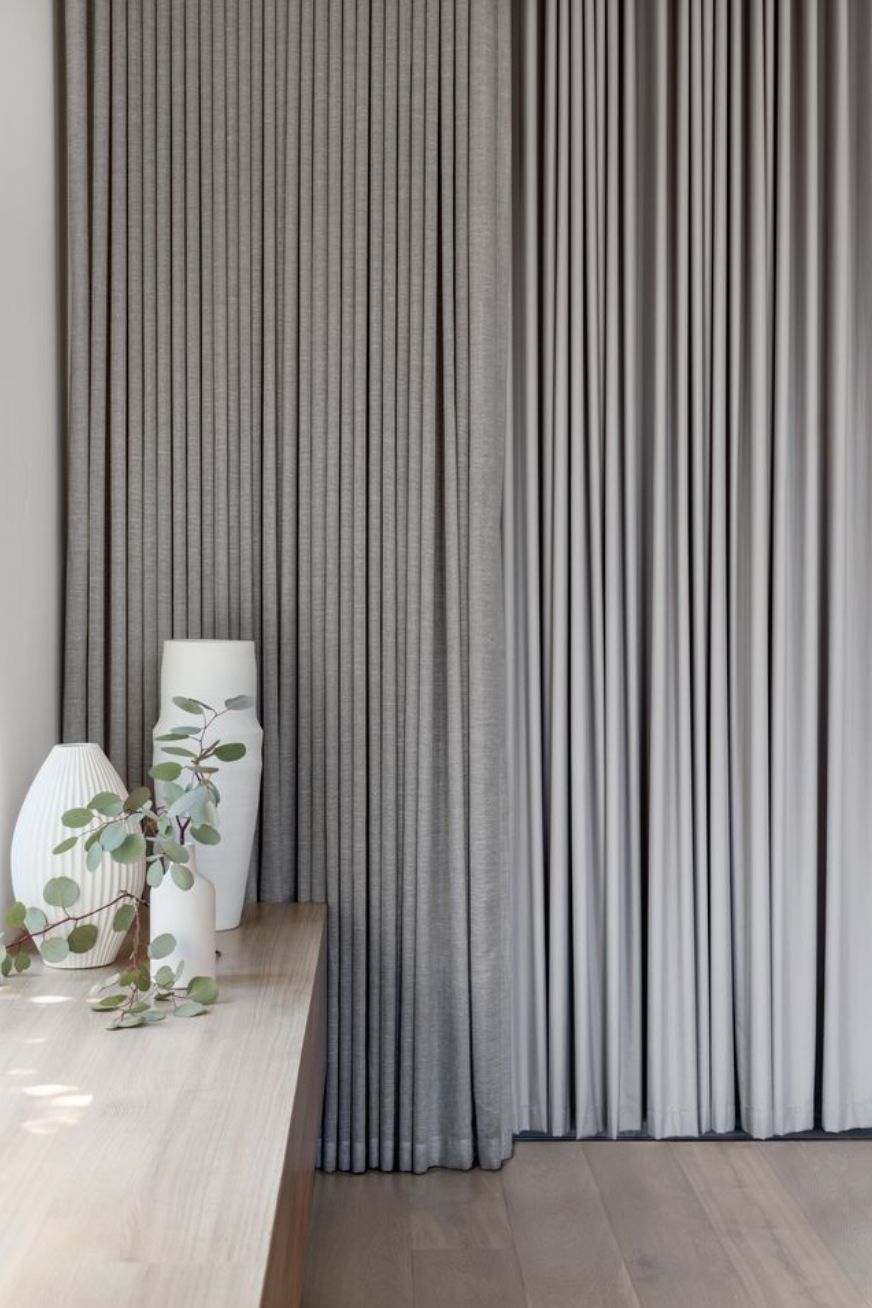
Layering a sheer with a blockout curtain — often called double curtains — is one of the most versatile window solutions there is. It gives you control over light, privacy, and warmth at every hour of the day.
Here is how to set it up well.
The two layers and what each does
The sheer layer softens daylight and gives daytime privacy while keeping the room bright and airy.
The blockout layer blocks light, gives full nighttime privacy, and creates a barrier against the cold glass for warmth.
Together they cover everything a window needs across a full day.
Which layer goes where?
There are two common arrangements.
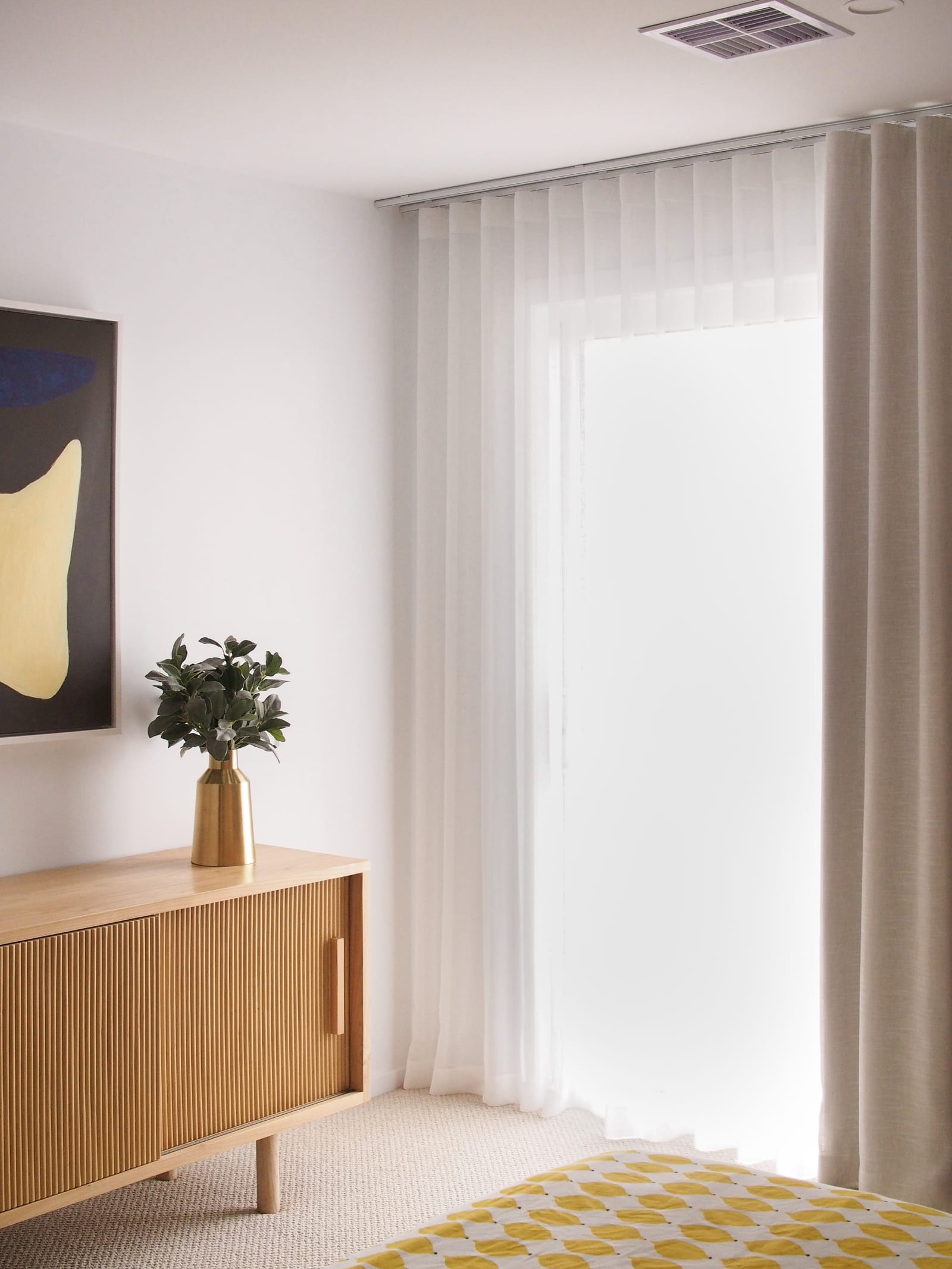
Sheer in front, blockout behind is the most popular. The sheer faces the room and stays visible during the day; the blockout sits closer to the glass and is drawn in the evening. This keeps the soft look on show most of the time.
Blockout in front, sheer behind is a richer, more dramatic look, where the blockout becomes the feature fabric. This suits formal living rooms and main bedrooms where the curtains are part of the décor.
Setting it up
Double curtains run on a double track — two parallel tracks, one for each layer — usually mounted at the ceiling and extended wall-to-wall.
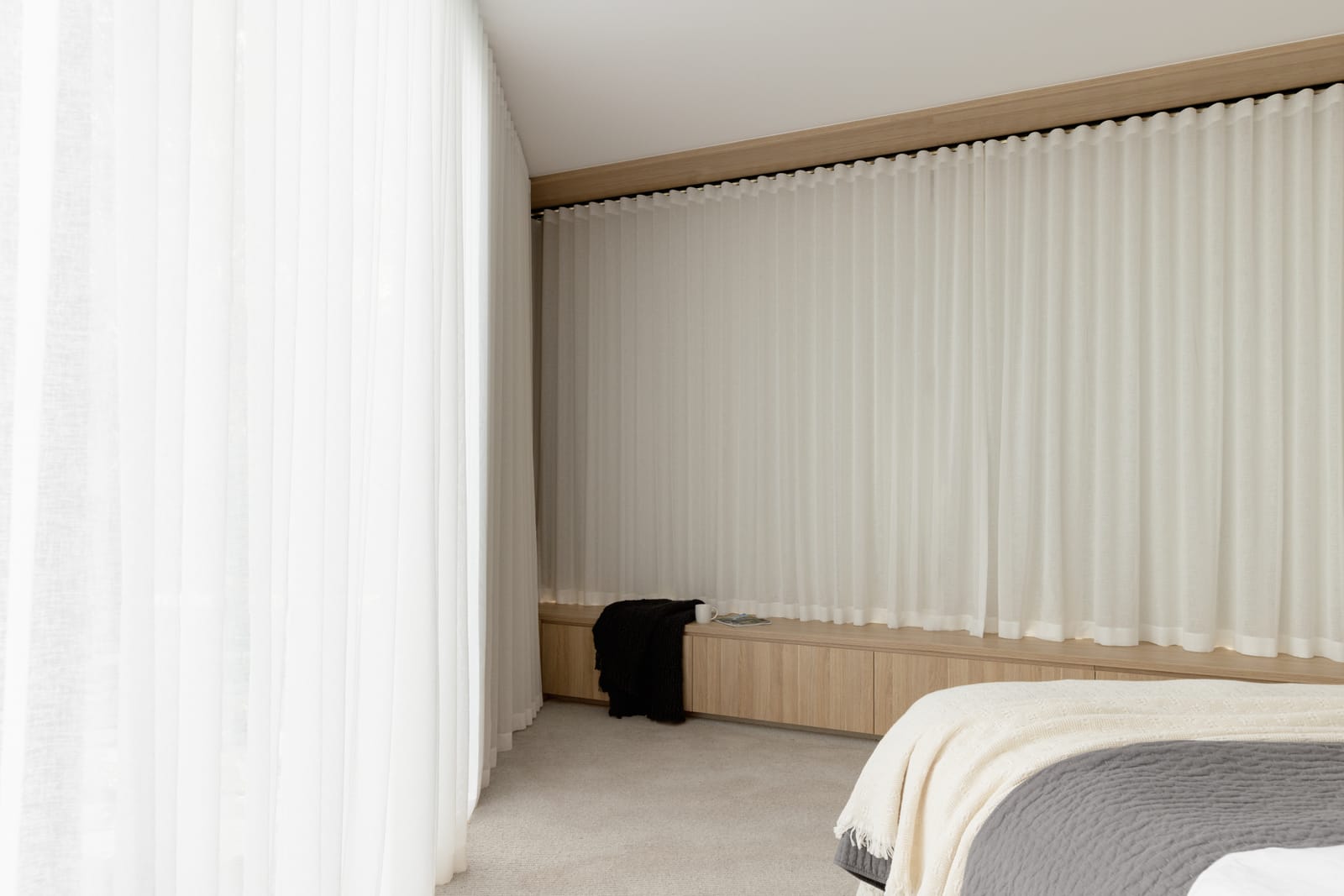
Running both layers ceiling-to-floor and well past the sides of the window gives the best look and the best performance, as it reduces the gaps where light and cold air sneak around the edges.
How it works across the day
In the morning and through the day, the blockout is open and the sheer softens the light.
In the evening, you draw the blockout for privacy, darkness, and warmth. It is a simple daily rhythm that makes a real difference to comfort.
Frequently Asked Questions
How do you layer sheer and blockout curtains?
Sheer and blockout curtains are layered on a double track, with one layer in front of the other. The sheer softens daylight and gives daytime privacy, while the blockout is drawn in the evening for darkness, nighttime privacy, and warmth.
Should the sheer or blockout go in front?
The most popular arrangement is sheer in front and blockout behind, keeping the soft look on show during the day with the blockout closer to the glass for evenings. A richer alternative places the blockout in front as the feature fabric, with the sheer behind.
What track do you need for double curtains?
Double curtains require a double track — two parallel tracks mounted together — so each layer can be drawn independently. The track is usually fitted at the ceiling and extended wall-to-wall for the best look and performance.
Do layered curtains keep a room warmer?
Layered sheer and blockout curtains keep a room warmer because the blockout layer creates a barrier against the cold glass, particularly when run ceiling-to-floor and wider than the window to reduce gaps. The sheer adds a small additional buffer.
Are double curtains and layered curtains the same thing?
Double curtains and layered curtains describe the same idea — a sheer and a blockout curtain on one window, on a double track — giving daytime softness and nighttime privacy, darkness, and warmth from the one setup.
More inspiration from Melbourne homes
Talk to Tiptop Blinds — Free In-Home Measure & Quote
With 65+ years in business, a 4.3 Google rating, and over 15,000+ happy Melbourne customers, Tiptop Blinds brings factory-direct prices and expert measuring to your door. Book a free in-home measure & quote or call (03) 9544 4999.